
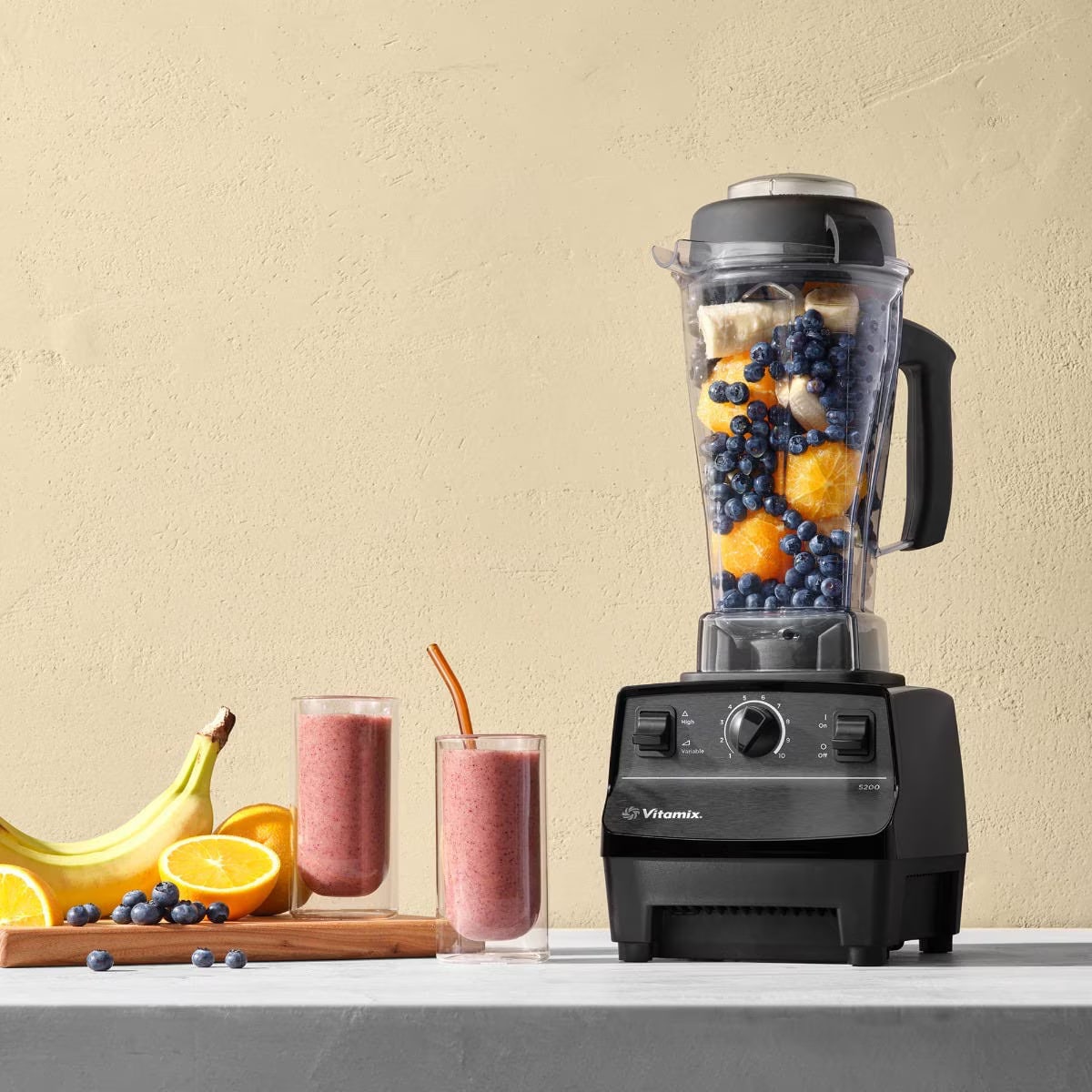
If you want the best buy-it-for-life blender, buy a Vitamix 5200. Not the prettiest blender. Not the quietest blender. Not the cheapest blender. Still the right answer. The current Vitamix 5200 costs $499.95 direct from Vitamix, and that sounds steep until you compare it with the graveyard of dead Ninjas, cracked pitchers, and stripped couplers most people burn through on the way there.
The reason the best buy-it-for-life blender is still the 5200 in 2026 comes down to boring stuff that matters more than presets: a simple manual control layout, a tall 64-ounce container that actually pulls ingredients into the blades, a 2 HP motor, and a seven-year full warranty. Vitamix also still sells the machine new, still sells containers and accessories around it, and still has a used market full of old units people refuse to kill.
If you just want the short version: buy the 5200 new at $499.95 if you want the full warranty, buy the certified reconditioned 5200 at $349.95 if you want the smartest value, and buy the E310 at $379.95 only if cabinet clearance matters more than the bigger container. Anything flimsier than that is usually a false economy.
Best Buy-It-For-Life Blender: Vitamix 5200
The 5200 wins because it nails the BIFL basics better than newer, fancier blenders do. The variable-speed dial gives you exact control. The tall narrow container handles smoothies, soups, nut butters, and purees with less babysitting than squat low-profile jars. The 64-ounce container is big enough for family-size soup but still narrow enough to keep frozen fruit moving without constant scraping.
Vitamix still lists the 5200 at $499.95, and the product page still carries the same simple pitch that made this machine a classic: manual control, big container, and the kind of blending power that turns fibrous kale and frozen fruit into something that does not feel like lawn clippings. The seven-year full warranty matters too. Cheap blenders talk about peak watts. Vitamix talks about warranty years because they know that is the real test.
The other thing that keeps the 5200 at the top is that it is old in a good way. It has not been overdesigned into a touchscreen appliance with more failure points than necessary. You get a switch, a dial, a tamper, and a motor that has been beating up ice and almonds for decades. That is exactly what you want in a buy-it-for-life kitchen tool.
Why the Vitamix 5200 Lasts When Cheap Blenders Die
Most consumer blenders die the same way most cheap appliances die: plastic drive parts wear down, pitchers crack, bearings get ugly, or the motor starts smelling like regret. A blender can have a big number on the box and still be disposable. The BIFL difference is not raw power. It is whether the machine was built for daily abuse and whether the company still supports it after the honeymoon period ends.
The Vitamix 5200 has a few real-world advantages here. First, the base is heavy and stable. That matters because high-speed blending creates more vibration than people think. Second, the tamper lets you keep thick blends moving instead of forcing the motor to fight an air pocket. Third, the jar shape is excellent. That sounds minor until you use a wide, shallow jar that leaves frozen fruit glued to the sides while the blades spin a sad little tunnel in the middle.
The longevity signal is not just marketing copy. A recent r/BuyItForLife thread showed a 1994 Vitamix still blending daily. Another r/Vitamix used-buying thread includes people happily using decade-old machines, swapping containers, and treating the base like something worth saving. That is what a BIFL ecosystem looks like. People do not bother hunting used parts for junk.
If you are building a durable kitchen, the 5200 fits the same logic as our best buy-it-for-life rice cooker and best buy-it-for-life pressure cooker picks. The winning products are rarely flashy. They are the ones that keep working after the trendy stuff gets replaced.
New vs. Reconditioned vs. E310
This is where the decision gets interesting.
New Vitamix 5200: $499.95 direct from Vitamix, seven-year full warranty. This is the cleanest option if you want zero ambiguity and know you will keep it for a decade or more.
Certified Reconditioned 5200: $349.95 direct from Vitamix, five-year warranty. Vitamix itself frames that as a $150 savings versus new, and for most sane buyers this is the sweet spot. You get the same basic machine, a real warranty, and none of the Marketplace roulette.
Vitamix E310: $379.95 direct from Vitamix, five-year warranty, 48-ounce container. The E310 is the better fit for smaller kitchens and shorter cabinets. It also makes more sense if you mostly blend for one or two people. The catch is simple: for only $30 more than the reconditioned 5200, you lose the bigger container and the classic tall-jar geometry that many Vitamix diehards still prefer.
My blunt take: the reconditioned 5200 is the value move, and the new 5200 is the no-regrets move. The E310 is the compromise move. Not a bad blender. Just not the one I would pick if the goal is buying once and being done.
What About Blendtec and Breville?
If you want alternatives, start with the honest ones.
Breville Super Q: Breville still lists the Super Q at $499.95. It is quieter than the 5200, looks better on a modern counter, and feels more appliance-like in the premium-small-electronics sense. I would still take the Vitamix. The Super Q is the blender you buy because you want refinement. The 5200 is the blender you buy because you want the argument to be over.
Blendtec Total Classic: Blendtec has real fans, especially among people who want push-button programs and a different jar design. I do not hate it. I just do not see a stronger BIFL case than the 5200. Vitamix has the deeper used market, the stronger long-term reputation in home kitchens, and the kind of stubborn manual design that ages well.
Cheap Ninja and Amazon best sellers: fine for a few years, maybe. Buy-it-for-life? No. They are exactly the kind of “good enough” kitchen purchases that get replaced three times while the Vitamix is still making soup.
If your goal is pure kitchen durability instead of countertop aesthetics, the 5200 is still the one to beat. Spend the money once, then stop thinking about blenders.
How to Buy Used Without Getting Burned
A used Vitamix can be a steal, but only if you treat it like used commercial gear instead of an impulse Facebook pickup. The used-buying threads are full of people scoring 5200s for $75, $100, or $150. Great when it happens. Do not build your plan around lottery-ticket pricing.
Here is what to check:
Run it on high. A healthy base sounds loud but steady. A sick one sounds rough, inconsistent, or burned out.
Inspect the container. Cloudy plastic is cosmetic. Cracks, leaking, or obvious blade-bearing issues are not.
Check the drive socket. If it looks chewed up, factor replacement into your price.
Ask what it was used for. A home smoothie machine is different from a machine that spent five years pulverizing ice in a cafe.
Price it against Vitamix recon. This is the big one. If a random used unit is $275 and the certified reconditioned 5200 is $349.95 with a warranty, just buy recon and sleep better.
The used path makes sense when the discount is real. It does not make sense when the seller wants almost-retail money for a mystery motor.
The Real Downsides
The 5200 is not perfect, and pretending otherwise is how you end up disappointed.
It is loud. Every real high-performance blender is loud, but the 5200 is not trying to hide it.
It is tall. If you hate pulling a blender out from under upper cabinets, measure first.
It is not ideal for tiny batches. The tall 64-ounce container is great for real blending volume, but if you mostly make two tablespoons of sauce, you will fight it.
It looks dated. Personally, I think that is part of the charm. If you want something sleek and minimalist, there are prettier ways to spend $500.
None of those are dealbreakers. They are just the price of buying the classic workhorse instead of a prettier compromise.
What to Skip
Personal blenders sold as forever machines. They are convenient, not buy-it-for-life.
Cheap blender bundles with twelve accessories. More plastic junk is not more value.
Touchscreen blenders with too much software energy. A blender should blend. The more it tries to be an iPad, the less I trust it in year eight.
Old used units priced too close to recon. If the savings are small, buy the machine with the warranty.
The Blunt Verdict
The best buy-it-for-life blender is still the Vitamix 5200. New at $499.95, it is expensive. Certified reconditioned at $349.95, it is one of the smartest kitchen buys on the internet. The E310 at $379.95 is the fallback if you need a shorter machine, not the first choice.
If you want one blender to make smoothies, hot soups, nut butters, purees, and frozen desserts for the next decade without turning into another dead countertop brick, buy the 5200. If you want the best value, buy the reconditioned one. If you want quiet beauty over brute reliability, look at Breville and accept the tradeoff.
For everyone else: get the Vitamix, then spend your time on what you are making in it. A blender this expensive should disappear into your life. The 5200 does.
If you are outfitting the rest of the kitchen the same way, read our guides to the best buy-it-for-life chef’s knife and the best carbon steel pan. Same philosophy. Buy once. Use forever.