
Carbon steel is the pan serious cooks switch to when they’re finally done replacing nonstick every 18 months. French bistros have cooked on carbon steel for 200 years. A well-seasoned pan will outlive you.
Reddit’s r/BuyItForLife has been debating carbon steel versus cast iron for years. In April 2025, a thread titled “Y’all love cast iron, but what about carbon steel pans?” racked up hundreds of comments. Another asked “BIFL pans: stainless steel, carbon steel, cast iron — which is most beginner-friendly?” The answer came back consistent across every thread: carbon steel is the daily driver, and if you buy right, you buy once.
Here’s exactly what to buy and why.
What Makes Carbon Steel Buy-It-For-Life?
Carbon steel is 99% iron and 1% carbon — essentially a thinner, lighter cousin of cast iron. Unlike nonstick cookware, which degrades and needs replacing every 1–3 years as its coating chips and flakes, carbon steel has no coating to destroy. Properly cared for, it literally gets better every year.
The pan builds a patina — layers of polymerized oil that create a naturally nonstick surface. Your 20-year-old carbon steel pan cooks eggs better than the day you bought it. That’s not a marketing claim. That’s chemistry.
The BIFL math is simple: A quality carbon steel pan costs $65–$100. A replacement nonstick pan costs $30–$60 every 1–3 years. Over 20 years, you’ll spend $200–$600 on nonstick cookware that ends up in a landfill. The carbon steel pan costs you nothing after purchase and performs better the longer you use it.
Carbon Steel vs. Cast Iron: Which Should You Buy?
Cast iron is the original BIFL cookware. Our review of the Lodge Classic 12-Inch Cast Iron Skillet covers why it earns its legendary status. But cast iron has real limitations that carbon steel solves:
Weight: The Lodge 12-inch weighs 8.0 lbs. The De Buyer Mineral B Pro at the same size is 6.0 lbs. The Blue Carbon Steel is just 4.2 lbs. If you’re cooking every day, that difference matters.
Heat response: Cast iron is slow to heat and slow to change temperature — great for steady, even cooking, but frustrating when you need to drop the heat fast. Carbon steel responds quickly to burner adjustments, making it a better daily driver.
Heating speed: Carbon steel gets hot faster. You’ll be searing your steak in 2 minutes instead of 5.
Sloped sides: Unlike cast iron’s vertical walls, carbon steel pans have flared sides optimized for sautéing and tossing. As Serious Eats editorial director Daniel Gritzer puts it: “If you want to launch something skyward, you need to send it off a sloping ramp, not crash it into a wall.”
Where cast iron still wins: Heat retention. Cast iron holds temperature better once hot, making it ideal for searing thick steaks and oven baking. Most BIFL kitchens run both. The Staub 5.5-Qt Round Cocotte and Le Creuset Signature Dutch Oven remain unmatched for braises and roasts. Carbon steel handles everything else.
One shared rule: No acidic sauces. Tomatoes, wine, and citrus will strip the seasoning on both cast iron and carbon steel. Use stainless steel for those.
The Contenders: Five Brands BIFL Cooks Actually Buy
1. De Buyer Mineral B — $65 (12.25″) ⭐ Best Value
De Buyer has manufactured cookware in France’s Vosges region since 1830. The Mineral B has accumulated over 15,000 five-star reviews and consistently lands atop “best carbon steel pan” roundups across the internet.
What you’re getting: 3.1mm thick steel, 99% iron and 1% carbon, made entirely in France. The pan ships with a beeswax coating that protects it in transit — wash it off with hot water before your first use. As you cook, the surface darkens from silver to gold to deep brown-black. The darker it gets, the better it releases food. This is not a coating you’re burning off; it’s a seasoning you’re building up.
The one weakness: The traditional iron handle limits oven use to 400°F for just 10 minutes. If you regularly finish proteins in a 450°F oven, that limitation matters.
Bottom line: The right pan if you’re primarily a stovetop cook. Outstanding value for a pan that will outlast you.
2. De Buyer Mineral B Pro — $100 (12.5″) ⭐ Best Overall
Same 3.1mm thick French steel as the Mineral B, but with an ergonomic hollow stainless steel handle that solves the oven problem entirely. Oven-safe to 500°F with no time restriction. Full stop.
The handle stays cooler during stovetop cooking too. In Prudent Reviews’ controlled testing, the Mineral B Pro handle measured 79°F after extended cooking — versus 88–95°F for traditional flat iron handles. Over a lifetime of daily cooking, that’s a significant quality-of-life improvement.
Redditors on r/carbonsteel are consistent on this: “Pro all the way. It lasts a lifetime — splurge a tiny bit. You don’t want to buy the regular, regret it later, and go ‘I wish I went with the Pro.'” The $35 premium over the Mineral B Classic gets you full oven capability and a dramatically more comfortable handle.
If you’re buying one carbon steel pan for the rest of your life, this is it.
3. De Buyer Blue Carbon Steel — ~$55 (12.5″) ⭐ Best for Lighter Cooking
At 4.2 lbs and 2mm thick, the Blue Carbon Steel is De Buyer’s lightest pan. It heats faster than the thicker Mineral B lines and is far easier to toss food in or lift single-handed. Oven-safe to 450°F.
The thinner steel retains less heat than the Mineral B — which matters for searing thick cuts of meat but is irrelevant for eggs, vegetables, and fish. r/BuyItForLife users recommend this as a “French omelette pan” or everyday egg pan, with the Mineral B Pro in reserve for higher-heat work. If you cook for one, or wrist fatigue is a concern, start here.
4. Mauviel M’Steel — ~$95 (12.6″) ⭐ Serious Eats’ Top Pick
Mauviel has been making French cookware since 1830. Their copper pans are legendary — see our Mauviel M’Heritage Copper Frying Pan review — and the M’Steel carbon steel line brings Mauviel’s manufacturing precision to a more accessible price.
In Serious Eats’ 2026 test of 15 carbon steel pans, the Mauviel was the overall winner: “Eggs glided around its surface without sticking, and crepes came out picture-perfect.” The wide flat cooking surface and comfortable rounded handle make it a joy to use daily. Hard to argue with a top pick from the publication that tested 15 pans head-to-head.
5. Made In Carbon Steel — $109 (10″) ⭐ Best Warranty Support
Made In launched in 2016 and has rapidly become a serious American cookware brand. Their carbon steel pans are manufactured in France and come with a limited lifetime warranty. Made In will even let you ship back old cookware for recycling when you upgrade.
At $109 for a 10-inch pan, you’re paying a premium over the De Buyer lineup. What you get: American-based customer service, a warranty you can enforce, and pans that arrive preseasoned and ready to cook on day one. If the peace of mind of a stateside company matters, Made In delivers. For pure per-dollar BIFL value, the Mineral B Pro still wins.
What About Matfer Bourgeat?
Matfer Bourgeat was the r/BuyItForLife budget answer for years. At around $54 for a 12-inch pan, it was the best value option — and Prudent Reviews’ controlled testing found it distributed heat more evenly than any competitor (only a 9°F difference from center to edge, versus 15°F+ for others).
The problem: Matfer Bourgeat is currently under recall in France for potential metal leaching in acidic cooking conditions. The company disputes the testing methodology. Until this is resolved, skip it. Prudent Reviews — who ran months of testing — agrees: hold off on Matfer Bourgeat until the recall situation clears.
How to Season Your Carbon Steel Pan
Seasoning is the one thing that stops people from buying carbon steel. It shouldn’t. Here’s the full process:
- Remove factory coating: Wash off the beeswax (De Buyer) with hot water and a stiff brush. No soap needed.
- Dry completely: Put the pan on a burner over low heat for 2–3 minutes to evaporate every drop of water. Moisture is the enemy.
- Apply oil: Rub a very thin layer of high-smoke-point oil (grapeseed, refined avocado, or flaxseed) over the cooking surface. Less oil than you think.
- Heat to smoke: Crank the burner to medium-high until the oil begins smoking lightly.
- Cool and repeat: Let the pan cool, then repeat the oil-and-heat process 2–3 more times.
That’s the initial seasoning. From that point, the pan seasons itself through normal cooking. Every meal adds another layer.
Daily care: Rinse with hot water after cooking, wipe dry with a paper towel, rub a tiny amount of oil into the surface before storing. Never use soap. Never dishwasher. Never leave it wet.
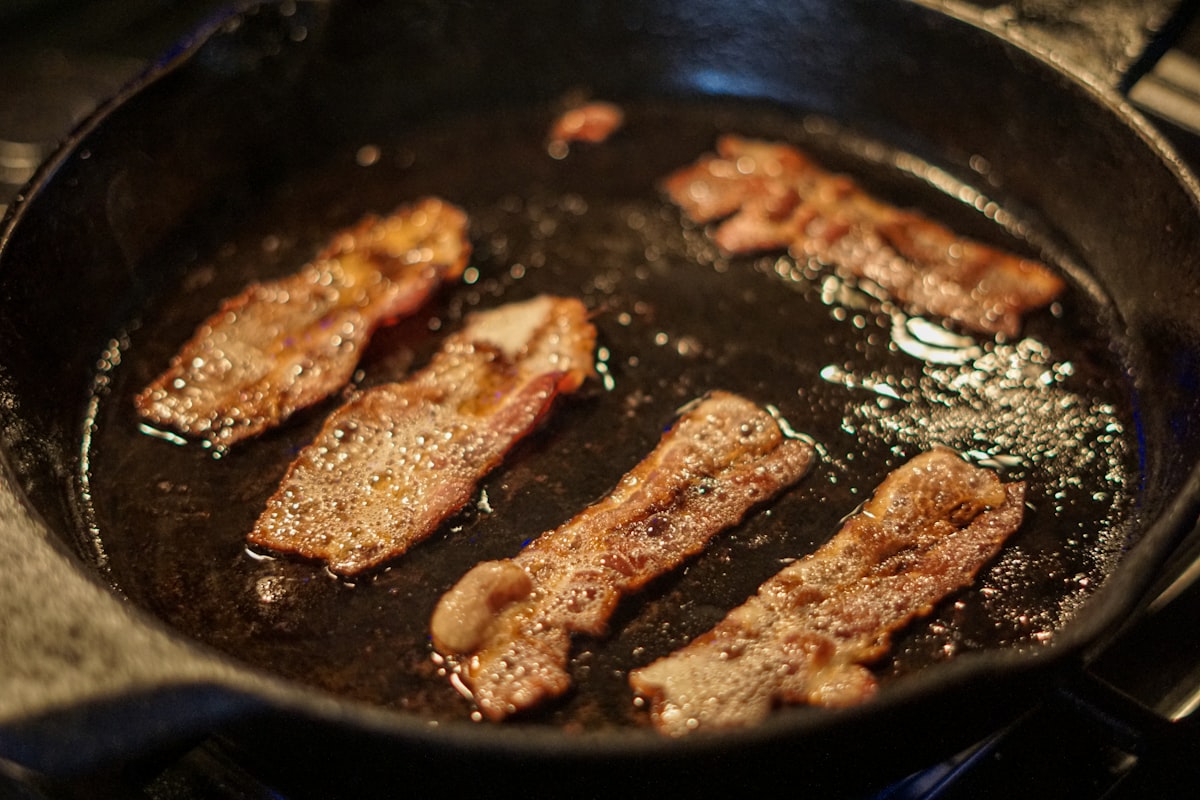
What to expect in the first month: The seasoning will be uneven. Food might stick occasionally. This is completely normal. Carbon steel takes 30–60 cooking sessions before the patina fully matures. Cook fatty foods first — bacon, chicken thighs, burgers. Hold off on eggs for a few weeks. By month two, your pan will be essentially nonstick.
The Complete BIFL Kitchen: Where Carbon Steel Fits
Carbon steel is your daily driver — the pan you reach for most mornings. It doesn’t replace everything:
- For slow braises and acidic sauces: The Le Creuset Signature Enameled Cast-Iron Dutch Oven handles tomatoes, wine, and 6-hour stews with zero seasoning concerns.
- For bread baking and roasts: The Staub 5.5-Qt Round Cocotte is the BIFL standard.
- For slicing: Pair your carbon steel pan with a BIFL knife. The Wüsthof Classic 8-Inch Chef’s Knife at $160 or the Global G-2 8-Inch at $110 are the two knives BIFL buyers return to again and again.
The Verdict
Buy the De Buyer Mineral B Pro at $100. It’s 3.1mm thick French steel from a company founded in 1830, oven-safe to 500°F, with a cool-running stainless handle. It will perform better in year 15 than it does today. The $100 is a one-time cost. Your nonstick replacements cost $40–$60 every 1–3 years and go straight to a landfill.
On a tight budget? Start with the De Buyer Blue Carbon Steel at ~$55. Lighter, more affordable, still excellent.
Want preseasoned + strong warranty? Made In at $109 is worth considering.
Skip: Matfer Bourgeat until the recall clears. Any nonstick pan, forever.
This is the pan you cook on every day for the rest of your life. The $100 decision is easy when you run the math.