
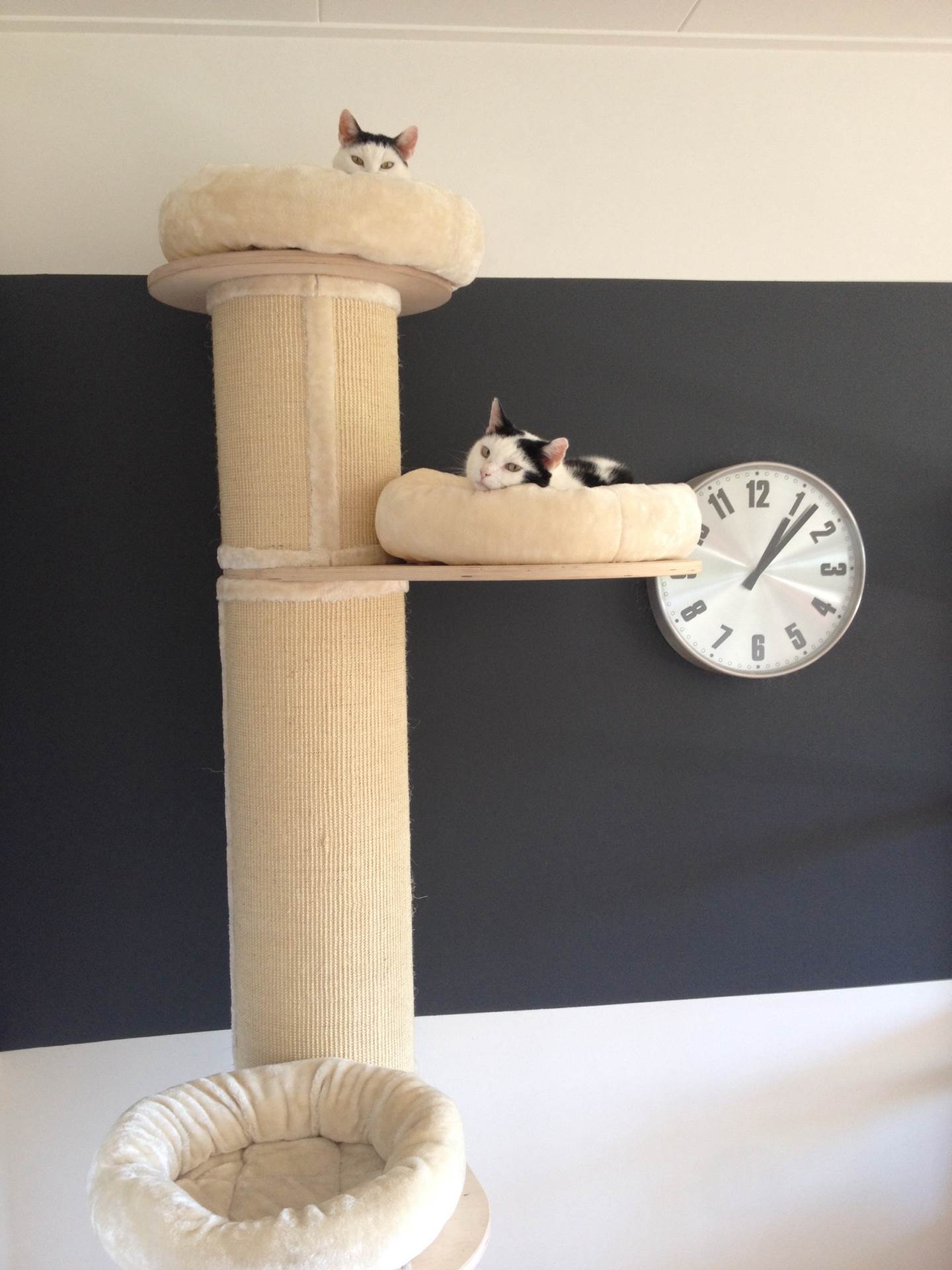
Most cat trees are garbage. Not garbage as in overpriced — garbage as in they fall apart in months. The sisal thins out, the platforms go saggy, the posts wobble, and you’re hauling the whole thing to the curb a year after you bought it. You’re not imagining it. You’ve just been buying the wrong thing.
This week a post on r/BuyItForLife hit over 1,100 upvotes after someone replaced a destroyed $100 cat tree with something built completely differently. The brand is Prestige Cat Trees, and the model is The Citadel. The OP — who described their kitten as “a small tornado powered by a lipo battery” that demolished the previous tree in two months — put it plainly: “This thing is built like a biblical ark.”
Here’s what actually separates a buy-it-for-life cat tree from everything at PetSmart, and the brands that deliver it.
Why Cheap Cat Trees Fall Apart
Most cat trees at big box stores use four materials that all fail the same way:
Cardboard tubes wrapped in rope — these are the vertical posts. They’re hollow. One determined cat and they collapse inward.
MDF boards — heavy, moisture-prone, and they crumble at the edges once cats start digging into corners. Which they will.
Polyester carpet — looks fine for three months, then pills, snags, and collects hair in a mat that cannot be cleaned.
Cheap sisal — it’s not actually sisal half the time. It’s paper or synthetic fiber that shreds within a year.
One of the top-voted comments in the r/BIFL thread nailed it: “Real wood is the key. Most these days are built from carpet tubes (heavy cardboard) for the posts and MDF for the flat surfaces. I bought a great one about 25 years ago. Three cats pretty well destroyed the carpet over 15 years. When they passed I gave it to my aunt for her cat. She recarpeted some areas and it’s still going strong.”
That’s what you’re buying when you go BIFL on a cat tree: a structure you can resurface, repair, and hand down.
Prestige Cat Trees: The Citadel (~$350–$500)
→ Prestige Cat Trees Citadel on Amazon
Prestige Cat Trees is a small brand designed specifically for large cats — Maine Coons, Ragdolls, Norwegian Forest Cats — breeds where the usual stuff gets demolished in weeks. Their trees ship in large, heavy boxes and assemble quickly. Solid wood frames, real carpet, thick sisal rope throughout.
The Citadel is their flagship. It’s built to look like a castle (with actual towers), has multiple perches, and can physically hold an adult human standing on it — the OP tested this. Multiple commenters in the thread confirmed they own Prestige trees and echoed the same thing: “I have 3 from them and they have held up so well. Would never buy anything else at this point.” Another: “I second this! The H-style one I bought a few years ago has held up like a biblical ark.”
Prestige also has their own website at prestigecattrees.com with more models if you want to buy direct. Their stated mission is straightforward: solid wood frames, thick sisal, plush platforms that hold up. Many pieces are handcrafted in the USA.
The math: At $350–500, it’s 3–5x a standard cat tree. If your last tree lasted a year and cost $100, Prestige pays off by year three. And unlike cheap trees, the structure itself doesn’t die — you can resisal the posts and re-carpet the platforms yourself. The frame is indefinite.
Other Brands Worth Considering
Molly and Friends (~$150–$250)
→ Molly and Friends cat trees on Amazon
Molly and Friends has been making cat trees for decades with real wood frames and natural sisal rope. Made in the USA. Consistently praised in BIFL discussions for structural integrity — they’re heavy, which is a feature, not a bug. The designs aren’t beautiful but they work, and they’ve lasted owners 10+ years with normal resurfacing.
On2Pets (Wall-Mounted, ~$100–$200 for sets)
→ On2Pets cat furniture on Amazon
On2Pets makes modular cat furniture that mounts directly to wall studs. There’s no floor-standing instability because there’s no floor-standing anything — cats walk on platforms and bridges screwed into actual wood. Nothing tips. Nothing wobbles. These will last as long as your walls. The tradeoff is installation effort and holes in your drywall, which not everyone wants.
Custom Sisal + PVC Trees ($200–$600, Etsy)
Several commenters in the thread mentioned custom cat trees built with PVC pipe cores wrapped in real sisal rope. PVC doesn’t rot, split, or absorb moisture. You can commission these on Etsy. They’ll never wobble because it’s structurally impossible for them to wobble. Search “custom sisal cat tree” on Etsy and filter by large size. Budget $300–600 for a substantial piece.
→ Heavy-duty sisal cat trees on Amazon
What to Check When Buying
Post construction. Are the vertical posts solid wood? Cardboard tube? Read the description carefully. “Engineered wood” (plywood, particle board with veneer) is fine and actually dimensionally stable. Cardboard tube is not.
Base weight. If you can easily lift the base with one hand on a 5-foot tree, it’s going to tip. Heavier is always better here.
Real sisal vs. synthetic. Real sisal (Agave sisalana fiber) is tan to brown, rough, and fibrous. Synthetic sisal is smoother and fades gray. Real sisal lasts 3–5x longer and cats prefer it — they’re not being picky, it just engages their claws more effectively.
Replaceability. Can you buy replacement sisal posts? Can you re-carpet platforms yourself? Prestige and Molly and Friends: yes. Most Amazon specials: no.
Weight ratings for large cats. Maine Coons and Ragdolls routinely hit 15–20 lbs. Many cheap trees rate individual platforms at 10 lbs. Do the math before you buy.
Under $150: Honest Budget Option
If the Prestige/Molly tier isn’t in the budget, the closest you get under $150 is the Frisco Heavy Duty Cat Tree from Chewy. It uses faux fur fabric rather than real carpet, but the internal structure is substantially better than standard trees. Multiple people in the thread mentioned 2–3 years of use without issues.
Honest assessment: at $150, you’re getting something that lasts 2–4 years with regular use from one or two cats. That’s not buy-it-for-life. If you have multiple cats or a large breed, skip this and save for Prestige. If it’s genuinely a budget constraint, Frisco is the least-bad choice in the tier.
Maintenance: How to Keep a Good Cat Tree Going
Resisal the posts yourself. Buy natural sisal rope in bulk — get actual sisal, not jute, they’re different fibers. About 50 feet of 1-inch sisal costs $15–20 on Amazon. Wrapping a single post takes 20 minutes. Do it when the existing sisal is 60–70% worn rather than waiting until it’s bare.
→ Natural sisal rope on Amazon
Vacuum the carpet weekly. Cat hair compacts into pile and accelerates wear. A stiff brush or rubber pet-hair glove pulls out the embedded hair that vacuums miss.
Check hardware quarterly. Tighten any bolts that have loosened. Wobbly connections put lateral stress on the structure and accelerate failure at the joints.
Re-carpet platforms if needed. For high-quality trees, you can staple-gun new carpet onto the platforms. It’s a 30-minute job and costs $20–40 in material from any fabric or home improvement store.
The Bottom Line
The cat tree market is mostly junk aimed at people who don’t realize they’ll be buying it again in a year. The $50–80 trees at Target and PetSmart will last 6–18 months with active cats. If you have a large breed, multiple cats, or a kitten that climbs everything in sight, you’re replacing it before next spring.
The r/BuyItForLife verdict this week is Prestige Cat Trees for a reason — solid wood, real sisal, multiple confirmed years of use. At $350–500, The Citadel is an actual buy-it-for-life purchase. If that’s not in reach right now, Molly and Friends at $150–250 is the next honest step.
Skip everything else. You’ll just be buying it again.
Looking for more buy-it-for-life home picks? We’ve covered the best BIFL cutting boards, can openers that last decades, and 10 small everyday items worth buying once.