
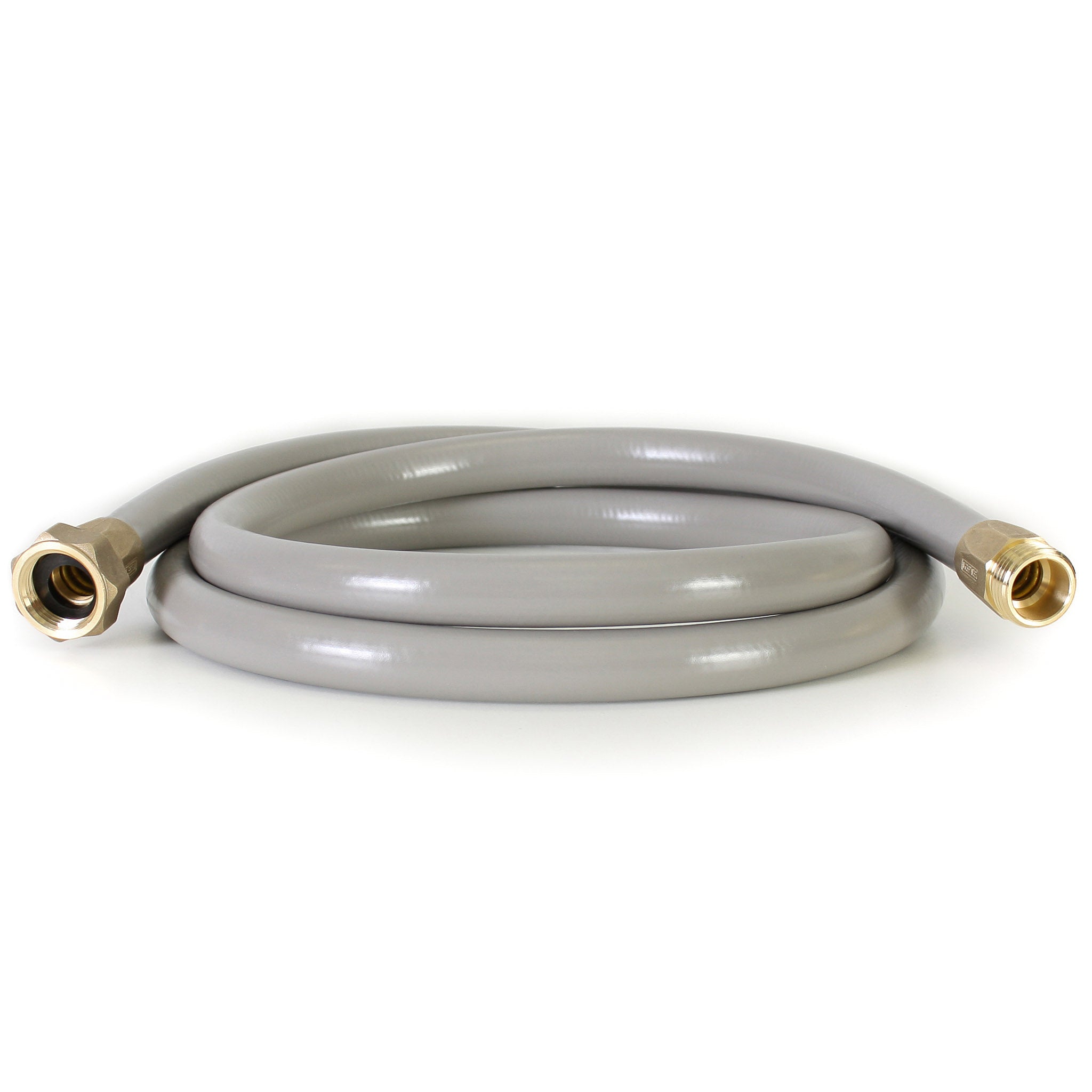
If you want one garden hose that can realistically earn the buy-it-for-life garden hose label, buy the Eley 5/8-inch Polyurethane Garden Hose. The 50-foot version currently runs about $113.23 direct from Eley, which is a lot for a hose, but it fixes the exact things that make normal hoses miserable: weight, kinks, cheap fittings, and the slow death spiral where one weak spot keeps folding in the same place until the whole hose is trash.
If that price makes you wince, fair. Most people should either buy the Eley once or buy a Flexzilla 5/8-inch hose for around $60 and accept that they are getting the best value pick, not the forever pick. That is the real choice.
The best buy-it-for-life garden hose is the Eley polyurethane hose
Eley makes a compelling case because the material choice is smarter than the usual “just make it thicker” approach. The company uses a polyurethane outer cover, forged lead-free brass fittings, and backs the hose with a 10-year no-leak, no-fail warranty. On the product page, Eley says the hose is up to 2 times lighter than rubber hose and delivers full 5/8-inch flow through proprietary fittings that do not choke down the water path.
That lines up with what outside testers keep saying. Wirecutter’s March 2026 update called the Eley 5/8-inch polyurethane hose “the best hose we’ve ever handled” and specifically praised how much lighter and less primitive it felt than standard hoses. That is the whole game here. Garden hoses do not usually fail because they burst dramatically. They fail because they become annoying enough that you hate using them. Then they get dragged harder, kinked more, stored worse, and eventually split.
The Eley hose attacks that failure chain directly. It has zero kink memory according to the company, meaning if it does fold, it does not keep collapsing in that same exact spot over and over. That matters more than most marketing claims because repeat-kink points are where a lot of hoses effectively die.
Price-wise, the Eley range is wider than most people realize. Eley’s current direct pricing starts at $38.19 for 6.5 feet, $70.35 for 25 feet, and $113.23 for 50 feet. Once you go past that, you are clearly paying for premium yard gear, not impulse-buy Home Depot gear. Still, if you keep a hose for 10 years, the 50-foot Eley works out to about $11.32 per year. That is not crazy.
Why most hoses fail long before the rubber actually gives out
Cheap vinyl hoses are awful for predictable reasons. They kink, they get stiff in cooler weather, they scuff through when dragged across concrete, and the fittings start leaking because the ends are crimped like disposable hardware. Expandable hoses fail differently but just as reliably. The latex core weakens, the fabric shell snags, and suddenly your “space-saving” hose is a seasonal replacement item.
Rubber hoses are better, but they have their own tradeoff. They are durable, they tolerate heat, and they stay flexible in colder weather, but they are also heavy enough to annoy you every single weekend. If you are hauling 50 or 75 feet around raised beds, trees, and a driveway, weight matters. So does how easily the hose coils after you are done.
This is why the Eley stands out. It gives you much of the abuse tolerance people like in heavy rubber hoses without the same drag-around-a-dead-anaconda feeling. That is a real upgrade, not marketing fluff.
The other hoses actually worth buying
1. Flexzilla Garden Hose, about $60, the best value pick
If you do not want to spend Eley money, the Flexzilla Garden Hose is the obvious fallback. Real Simple’s 2026 roundup named Flexzilla its best overall hose at $60, and Business Insider’s 2026 guide picked Flexzilla as the best extra-long option while still putting Eley in the heavy-duty slot.
Flexzilla’s pitch is simple: it is very flexible, relatively light, and much less aggravating than basic hardware-store hoses. That matches the real-world comments you keep seeing from people who just want a hose that coils without a fight. The weakness is that it does not feel like heirloom gear. It feels like very good modern plastic-rubber hybrid gear. There is a difference.
I would buy Flexzilla if you want the sweet spot. I would not call it true buy-it-for-life unless your standard is “lasts a good long while and does not make me mad.” Which, honestly, is a reasonable standard for a hose.
2. Dramm ColorStorm Rubber Hose, around $58 to $94, the best classic rubber hose
The Dramm ColorStorm Premium Rubber Hose is what you buy if you still believe old-school rubber is the right answer. Dramm says the hose is made from EPDM rubber, stays flexible down to -25°F, handles hot water up to 160°F, and resists cracking and abrasion. Search results from garden retailers currently show it starting around $94, while older Amazon-linked pricing for the 50-foot version has sat closer to the high $50s.
Dramm’s real advantage is toughness. If your hose lives on rough pavement, sees hot water, or gets used more like contractor gear than backyard gear, heavy rubber still makes a lot of sense. The catch is the same as always: it is heavier than polyurethane or Flexzilla-style hoses, and that gets old fast if you are moving it often.
3. Continental or Briggs-style heavy-duty rubber hoses, roughly $100, for pure abuse tolerance
If your only question is “what survives the most abuse,” industrial-style rubber hoses still deserve a mention. Real Simple’s 2026 testing called the Briggs and Stratton Heavy-Duty Garden Hose its best rubber pick at about $105. That category appeals to people who do not care if the hose is elegant. They care that it survives sun, pressure, dragging, and neglect.
That is a legit use case. It is just not my top recommendation for most homeowners because daily usability matters too. A hose can be technically durable and still be the wrong buy if everyone in the house hates dealing with it.
What I would skip
Expandable hoses: great demo, lousy long-term bet. They are fun for six months and suspicious by year two.
No-name stainless “metal” hoses: better than the worst vinyl junk, still usually paired with questionable fittings and awkward handling. They solve puncture fear more than they solve actual hose usability.
Cheap vinyl hoses: you already know how this ends. They kink in the same spot, leak at the collar, and get stiff exactly when you are already irritated.
Materials analysis: polyurethane vs rubber vs hybrid hose materials
This is the part most buyers skip, and it matters.
- Polyurethane is the premium move if you want light weight, kink resistance, and high abrasion resistance without the bulk of rubber. Eley is the clear leader here.
- EPDM rubber is still the king of old-school toughness. It handles temperature swings and abuse well, but it is heavy.
- Hybrid polymer hoses, like Flexzilla-style designs, win on easy handling and value. They are the best compromise for most people, but I still trust polyurethane and premium rubber more for long-haul ownership.
If you have a bad shoulder, a long narrow side yard, or a hose reel mounted far from the spigot, buy lighter. If the hose gets abused by hardscape, heat, and constant dragging, rubber still earns respect.
Real durability signals that matter more than marketing
There are three things I care about with hoses.
- Fittings: forged brass beats flimsy crimped ends every time.
- Kink behavior: does the hose recover, or does one fold become a permanent character flaw?
- Storage reality: does it coil cleanly enough that you will actually put it away right?
That last one is underrated. A hose that coils badly gets left in the sun, left across the driveway, and run over. The best hose is partly the one you are willing to treat well because it does not fight you.
This is the same logic behind our garage shop lights guide and our gas grill repair breakdown. Durability is not just about surviving one dramatic event. It is about avoiding the little failure loops that wear people down into replacing something that should have been maintainable.
The cost-per-year math
Let’s keep it simple.
- Cheap vinyl hose: $30 every 2 years for 10 years = $150
- Flexzilla: $60 and maybe replace it once over 10 years = $120
- Eley 50-foot polyurethane: $113.23 once over 10 years = $113.23
The premium option is not automatically more expensive over time. It often just looks expensive on day one.
My honest verdict
The Eley 5/8-inch Polyurethane Garden Hose is the best buy-it-for-life garden hose because it solves the actual ownership problems, not just the spec-sheet problems. It is lighter than serious rubber hoses, tougher than the cheap stuff, backed by a meaningful warranty, and praised by testers who handle a lot of hoses for a living.
If you want the best value, buy the Flexzilla. If you want the old-school tank option, buy the Dramm ColorStorm or another premium EPDM rubber hose. But if you want the one hose I would tell a friend to buy and stop thinking about for the next decade, it is Eley.
And while you are fixing your watering setup, pair it with gear that lasts on the other end too. Our guides to brands with lifetime warranties and small everyday items worth buying once make the same argument in different categories: paying for fewer failure points usually wins.
Sources: Eley product page and current direct pricing, Wirecutter’s March 2026 garden hose update, Real Simple 2026 garden hose testing, Business Insider 2026 garden hose guide, Dramm product and retailer listings.