
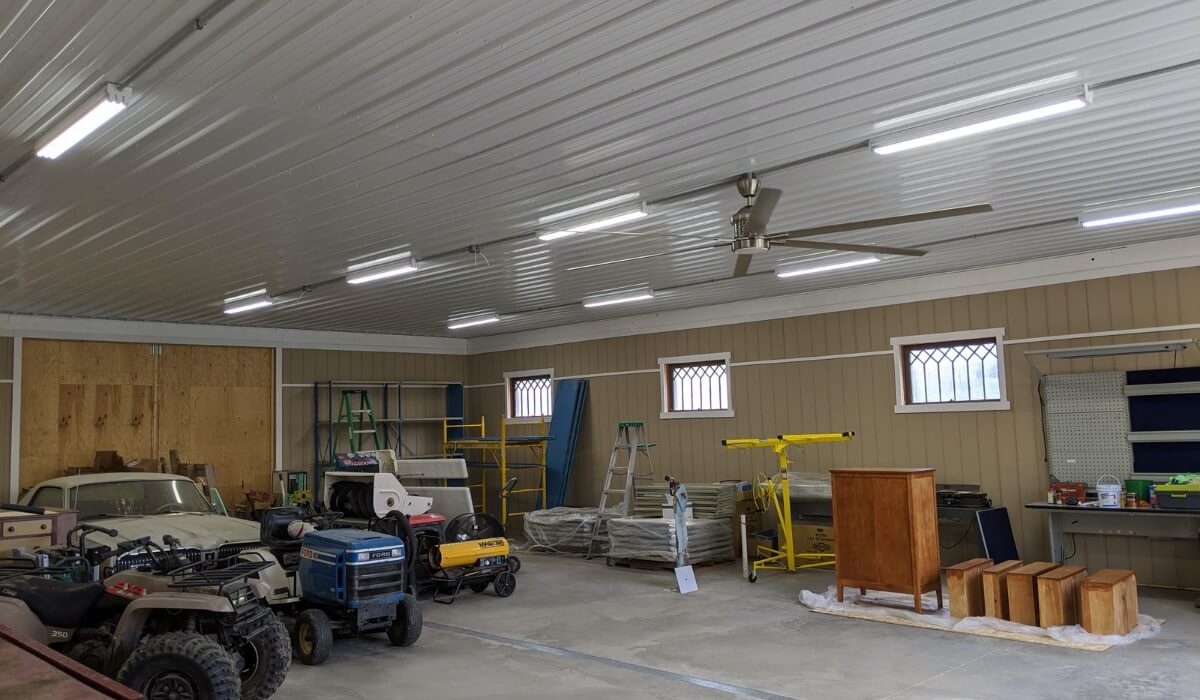
The best garage shop lights in 2026 are hardwired or linkable LED strip fixtures from known brands, not cheap screw-in deformable bulbs. If you want lights you can install once and forget for 10 years, buy fixtures with proven housings, decent drivers, and parts you can still replace later. My top value pick is Lithonia Lighting 4-foot integrated LED strip. My long-haul pick is PrimeLights USA-made BOLT/STINGRAY lines if your budget allows.
This guide is built for buy-it-for-life thinking, not just “bright enough for now.” Target keyword: best garage shop lights. I also dug through r/BuyItForLife threads on shop lights, where the recurring advice is simple: stop rebuying bargain fixtures, use fewer better units, and prioritize serviceable installs.
Quick answer: the best garage shop lights by budget
- Best value: Lithonia Lighting 4ft LED strip (roughly $30 to $80 depending on model and output)
- Best upgrade: Sunco 4ft linkable LED shop lights (typically $40 to $90 depending on pack and sales)
- Best heavy-duty long-term pick: PrimeLights USA-made BOLT/STINGRAY fixtures (roughly $149+)
- Best large-shop pick: Barrina 8ft high-output fixtures (up to 15,000 to 17,000 lumens per unit, around $190 for premium models)
Amazon links (affiliate):
- Lithonia Lighting LED strip light
- Sunco 4ft LED shop light
- Barrina 8ft LED shop light
- PrimeLights LED shop light
- Feit Electric LED shop light
- Hykolity LED shop light
What “buy it for life” means for garage lighting
No LED lasts forever. Drivers die, power surges happen, and garages are rough environments. But a good fixture can run 8 to 15 years in real use, while the cheap stuff fails in 12 to 24 months. That is the whole game.
For best garage shop lights, I care about five things:
- Stable housing: metal body, not brittle thin plastic
- Driver quality: less flicker, better thermal control, fewer early deaths
- Serviceability: replaceable tubes or at least a known warranty path
- Output that matches your work: not marketing lumens, usable even light
- Supply-chain reality: can you still get the same model or parts in 3 years?
The U.S. Department of Energy has repeatedly shown LED systems cut energy use dramatically versus older fluorescent and incandescent setups, and ENERGY STAR keeps pushing quality standards that reduce early failure rates (DOE LED guide, ENERGY STAR lighting).
The 2026 picks (with real tradeoffs)
1) Lithonia Lighting 4ft strip, best value for most garages
Lithonia is boring in the best way. You can buy it at mainstream stores, electricians know it, and the brand has real distribution in North America. Price jumps by model and output, but it’s usually in the $30 to $80 range per fixture in common residential sizes.
Why it wins: easy sourcing, dependable build quality for the price, and you are not stuck with a random no-name brand that disappears next quarter.
Weakness: some entry integrated models are not very repair-friendly once the driver dies. If you want maximum service life, prioritize versions with stronger warranty support and avoid the absolute cheapest SKU.
2) Sunco 4ft linkable lights, best for simple DIY installs
Sunco’s linkable fixtures are popular because installation is fast and clean. In practice, many buyers run them in 2 to 4 light chains. Typical pricing lands around $40 to $90 depending on bundle size and promos.
Why people like them: bright 5000K options, practical hardware in the box, and easy expansion.
Weakness: quality control can vary across production runs, so buy from sellers with straightforward return/warranty paths.
3) PrimeLights BOLT/STINGRAY, best long-haul choice
This is the “stop messing around” option. PrimeLights positions these as USA-made work fixtures and they are priced like it. STINGRAY models often start around $149 and climb with output and bundle size.
Why it’s the long-term pick: robust construction, strong output, and a business model aimed at workshop users who hate replacing dead lights.
Weakness: cost. If your garage is occasional storage plus one oil change a year, this is overkill.
4) Barrina 8ft high-output, best for bigger two-bay and long shops
Barrina is all over garage and grow-light communities because the lumens-per-dollar can be excellent. Their 8ft high-output lines push serious light, with premium models around $189.99 and listed around 15,000 to 17,000 lumens.
Why to buy: fewer fixtures to cover long spaces, strong brightness, easy to scale.
Weakness: some setups prioritize output over long-term driver durability, so avoid overdriving fixtures in hot enclosed ceilings.
How many lumens you actually need
This is where most people waste money. They buy whatever says “super bright” and end up with glare instead of useful visibility.
- Basic parking/storage garage: 30 to 50 lumens per sq ft
- General DIY workshop: 50 to 75 lumens per sq ft
- Serious bench work, fabrication, detailing: 75 to 100 lumens per sq ft
Example: a 20×20 two-car garage is 400 sq ft. For real project work at 75 lumens/sq ft, target around 30,000 lumens total. That usually means 5 to 6 decent 4ft fixtures, not two giant glare cannons.
Color temperature and CRI, do not ignore this
If you buy one thing right, buy this right.
- 5000K: best default for garages, crisp and clear
- 4000K: softer and easier on eyes for mixed-use spaces
- CRI 80+: minimum
- CRI 90+: worth paying for if you paint, stain, or color-match
Cheap low-CRI fixtures make paint and wiring colors look wrong. You only need to make that mistake once.
What r/BuyItForLife gets right about shop lights
The best Reddit advice is usually from people who have already paid the failure tax. In recurring shop-light threads, the common pattern is:
- skip gimmicky fold-out “deformable” bulbs for main lighting
- prefer fixed fixtures with known brands and warranties
- mount for even coverage, not max brightness in the center
- buy once, then stop thinking about lighting for years
Relevant thread examples: shop light recommendations and broader 2026 BIFL discussion threads like small everyday BIFL upgrades.
The stuff to skip
- No-name integrated LEDs with no support site: if the driver dies, it’s e-waste.
- Overdriven ultra-cheap fixtures: bright on day one, dead by year two.
- Single-point lighting plans: one giant fixture creates shadows everywhere.
- Daylight claims without specs: if CRI and warranty are missing, keep walking.
My recommended setup for most people
If you asked me what to install in a standard two-car garage today, I would do this:
- five or six 4ft fixtures at 5000K, CRI 80+
- two rows for even spread over car + bench zones
- independent switching (or separate plug zones) so you are not blasting full output every time
- a brand with clear replacement path: Lithonia for value, PrimeLights for long-haul
That gives you clean, no-fuss light without turning your garage into an operating room.
Cost over 10 years, the BIFL math
Here is the simple reason quality wins:
- Cheap path: $25 fixture replaced every 18 months. Over 10 years, you buy 6 to 7 units plus your time and frustration.
- BIFL path: $60 to $150 fixture that runs most of the decade with no intervention.
Even before electricity savings, the better fixture usually costs less across a full ownership cycle.
Installation mistakes that kill shop lights early
Most early failures are not random, they are setup mistakes. If you want decade-level life, avoid these:
- Mounting too tight to insulation: LED drivers hate heat. Give fixtures breathing room.
- Daisy-chaining beyond spec: Linkable systems have a max run for a reason. Exceed it and you stress the electronics.
- Bad power quality: Garages with old wiring and frequent surges kill drivers. A simple surge protector on plug-in runs helps.
- Skipping dust cleanup: Fine dust buildup traps heat. Blow fixtures out a few times a year if you cut wood or metal.
If you are hardwiring multiple circuits, this is one place where paying an electrician once is cheaper than chasing flicker issues for years.
Best garage shop lights by use case
- Weekend DIY + storage: Lithonia 4ft strips at 4000K to 5000K, 4 to 5 fixtures in a two-car garage.
- Woodworking bench-heavy shop: Sunco or Lithonia rows plus a high-CRI task light over the main bench.
- Auto restoration bay: PrimeLights or high-output Barrina layout with side lighting to reduce body-panel shadows.
- Large detached shop: mix 8ft strips and high-bay units, then zone-switch by work area.
FAQ: quick answers before you buy
Are screw-in deformable LEDs ever worth it?
As temporary lighting, sure. As your primary BIFL plan, no. Too many fail early and coverage is uneven.
Should I buy integrated LEDs or replaceable tube fixtures?
If long serviceability is your top priority, replaceable tube systems are still easier to keep alive long term. If you want clean install speed, quality integrated fixtures can still be a good 8-12 year solution.
Is 6500K better than 5000K for garages?
Usually no. 6500K can feel harsh for long sessions. 5000K is the safer default for most workspaces.
How many fixtures for a 24×24 garage?
At workshop brightness, usually 7 to 8 decent 4ft units, depending on lumen output and ceiling height.
Final verdict: what should you buy?
If you want the best garage shop lights without overspending, buy Lithonia strips and lay them out correctly. If your garage is a real working shop and you are tired of replacing junk, spend up for PrimeLights and be done with it.
Either way, the winning strategy is the same: fewer, better fixtures, installed once, with a brand you can still buy in 2030.