
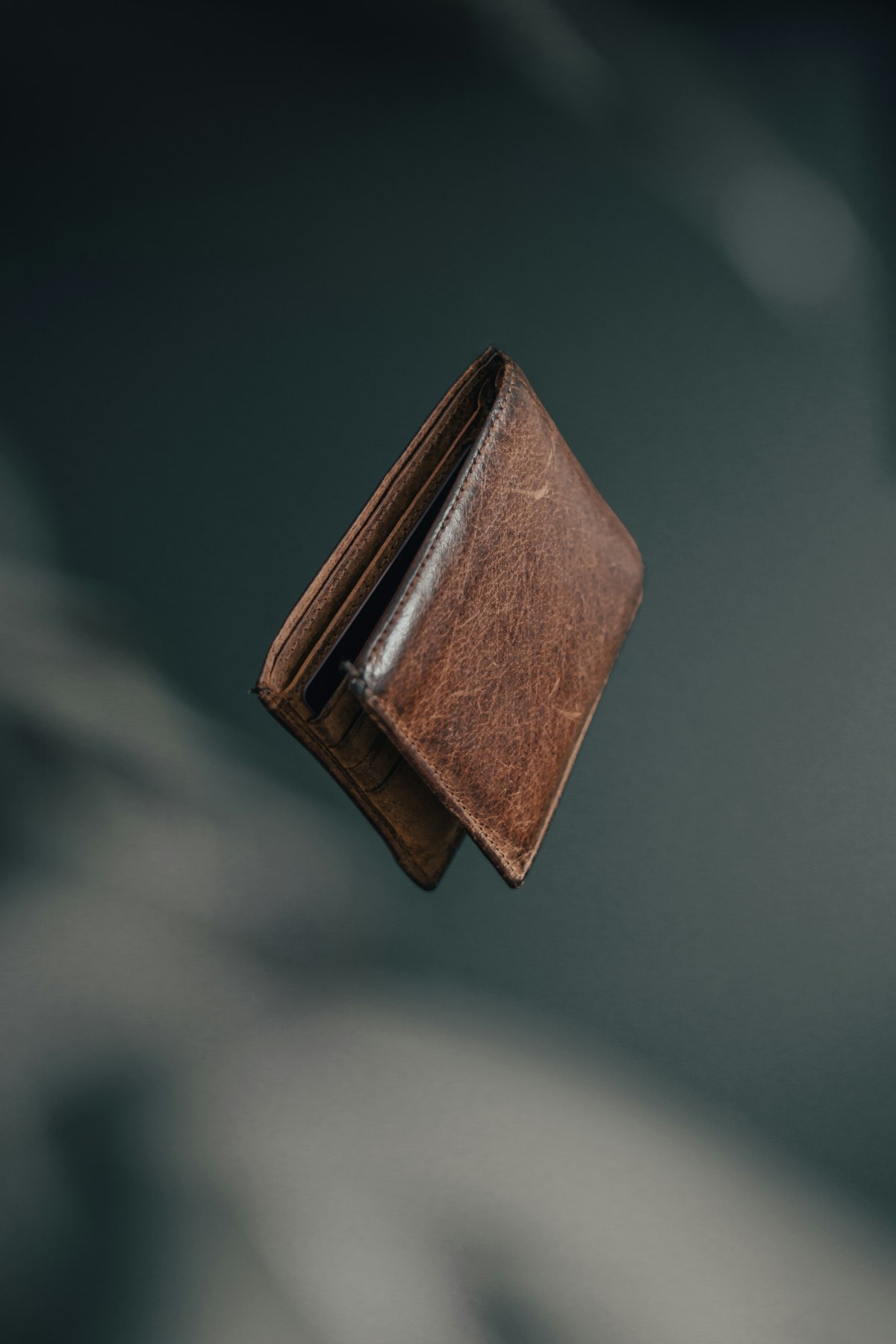
The average person buys a new wallet every 2-3 years. That’s $15-40 each time, and most of them look like garbage by month six. The right wallet costs more up front but outlasts five cheap ones. Here are the ones that actually earn the “buy it for life” label, and the ones that don’t.
Leather Wallets That Actually Age Well
Saddleback Leather Medium Bifold — $75-85
Saddleback builds wallets from full-grain leather in Leon, Mexico, and backs them with a 100-year warranty. That’s not a typo. The medium bifold holds 8-10 cards plus cash, uses four layers of pigskin lining, and the stitching is polyester thread that doesn’t rot.
The leather is thick — noticeably thicker than anything you’ll find at a department store. It takes 3-4 months to break in, and the bifold starts stiff enough that you’ll wonder if you made a mistake. You didn’t. The April 2025 r/BuyItForLife wallet thread had multiple owners reporting 5-10 years with no stitching failure. The patina develops fast on the Coffee and Dark Brown colors.
Downsides: it’s bulky. If you carry your wallet in a front pocket, look at their slim wallet instead ($55-65). The medium bifold is a back-pocket carry. Also, full-grain leather scratches. That’s normal. It’s a feature, not a bug — the scratches blend into the patina over time. Same philosophy as a good cast iron skillet — it gets better with use.
Find Saddleback Leather wallets on Amazon →
Thread Leather Goods Bifold — $65-75
Reddit’s sleeper pick. Thread uses full-grain Horween leather (the same tannery that supplies Alden and Allen Edmonds) at half the price of the fancy brands. Hand-sewn with waxed linen thread. The bifold holds 6-8 cards and develops a caramel patina that looks better every year. CNN Underscored rated it their top lightweight bifold pick for 2026.
The catch: Thread is a small operation and restocks sell fast. If you see one in stock, grab it.
Find Thread Leather wallets on Amazon →
Andar Apprentice — $55-60
Full-grain vegetable-tanned leather, made in small batches. Andar showed up constantly in late-2025 r/BuyItForLife threads as the “best value leather wallet.” The Apprentice is their slim bifold — 6 card slots, one bill compartment, no weird extra layers. The leather is thinner than Saddleback (so it breaks in faster) but still thick enough to last a decade.
Find Andar wallets on Amazon →
Metal Wallets: Minimalist and Indestructible
Ridge Wallet — $75-95
The Ridge is the wallet that kicked off the metal-cardholder trend, and it’s still the benchmark. Aluminum, titanium, or carbon fiber plates held together with elastic bands. Holds 1-12 cards plus cash on the exterior money clip. RFID blocking is built in (whether that matters is debatable, but it’s there).
Ridge claims a lifetime warranty. Real-world reports on r/BuyItForLife are mixed — the elastic band loosens after 2-3 years of heavy use, and Ridge replaces it for free. The plates themselves are indestructible under normal use. If you carry fewer than 8 cards and don’t carry much cash, this is the one.
The titanium version ($150) is overpriced unless you’re a material nerd. The aluminum one does the same job for half the money.
Find Ridge wallets on Amazon →
Fantom X — $80-90
The Fantom X is what happens when a BIFL nerd designs a cardholder. CNC-machined from a single block of aluminum — no screws, no rivets, no elastic to wear out. The lever mechanism fans out your cards. It holds 7-13 cards. The money clip is integrated.
Multiple YouTube reviews in 2026 (including the $3000 wallet comparison) rated it “best BIFL metal wallet.” The lack of elastic is the killer feature — that’s the part that breaks on every other metal wallet. Fantom solved it by not having one.
Downside: expensive, and the lever mechanism makes a satisfying but audible click. Not subtle in a quiet meeting.
Find Fantom X wallets on Amazon →
Ekster Aluminum Cardholder — $60-70
Ekster’s big trick is the pop-up card mechanism — press a button, cards fan out. Aluminum shell, RFID blocking, holds 6 cards. The modular system means you can add a cash clip or leather wallet layer.
Durability is decent but not BIFL-tier. The pop-up mechanism uses a spring that can collect pocket lint after 18-24 months. Ekster replaces under warranty, but it’s a recurring maintenance item the Ridge and Fantom avoid. Best for people who prioritize convenience over absolute longevity.
Find Ekster wallets on Amazon →
The Shell Cordovan Option (If You Want It Forever)
Shell cordovan is a specific cut of horsehide — dense, non-porous, and nearly immune to cracking. It’s what Alden uses for their dress shoes (the ones that last 20+ years with resoling). Horween in Chicago is the gold-standard tannery, and a shell cordovan wallet from anyone using their leather will outlast you.
Alden makes a shell cordovan bifold that retails for $550-580. That’s not a typo either. It’s a 4-card-slot, no-frills bifold made from the same leather as $1,200 dress shoes. If that sounds insane, skip it. But a shell cordovan wallet genuinely can last 30+ years — the leather doesn’t crease like cowhide, it rolls.
The more reasonable play: find a smaller maker who uses Horween shell cordovan. Chester Mox, Ella Mae, and MarxFitur all make cordovan wallets in the $120-180 range. Same leather, same longevity, no Alden premium. Think of it like buying leather boots — you can go Alden or you can go with a smaller maker using the same materials for less.
Find shell cordovan wallets on Amazon →
What to Skip
Amazon generic leather wallets ($10-20). Bonded leather glued to cardboard. You’ll see cracking at the fold within 6 months. Every time.
Fossil wallets ($40-60). Genuine leather (the lowest grade), thin stitching, and Fossil doesn’t offer a meaningful warranty on wallets. They’re fashion items, not BIFL.
Coach wallets ($100-150). Better leather than Fossil, but the canvas and coated canvas versions delaminate. The full-leather versions are fine but overpriced for what you get compared to Saddleback or Thread.
Carbon fiber anything. Carbon fiber plates on wallets are a gimmick. They’re stiff, they scratch your cards, and the material adds zero durability over aluminum at twice the price.
RFID-blocking wallets as a selling point. RFID skimming is essentially nonexistent in 2026. Don’t pay extra for it. If it’s free (like Ridge includes), fine. Don’t make it your reason.
Cost Per Year: The Real Math
A $20 Fossil wallet lasts 2 years (if you’re lucky). That’s $10/year. A $75 Saddleback bifold lasting 15+ years costs $5/year. The Alden cordovan at $550 lasting 30 years? $18/year — actually the most expensive per year, but it’ll be the nicest thing in your pocket every single day of those 30 years.
The Ridge at $75 lasting 10+ years (with free elastic replacements) lands around $7.50/year. The Fantom X at $85 with no wear-out mechanism could hit $4-5/year over a long enough timeline.
For context, that’s better value than most small everyday items people buy once — a good wallet sees more daily use than almost anything else you own.
My Pick
For most people: Saddleback Leather Medium Bifold ($75-85). Thick full-grain leather, 100-year warranty, and it looks better every year. It’s the wallet equivalent of a Lodge cast iron skillet — not the prettiest on day one, but it earns its keep.
For minimalists: Fantom X ($80-90). No elastic, no screws, no parts to fail. Machined aluminum block. It’s the BIFL answer to the cardholder trend.
On a budget: Andar Apprentice ($55-60). Full-grain leather, fast break-in, looks like a $100 wallet for half the price.
Stop buying wallets that fall apart. Buy one that doesn’t.