
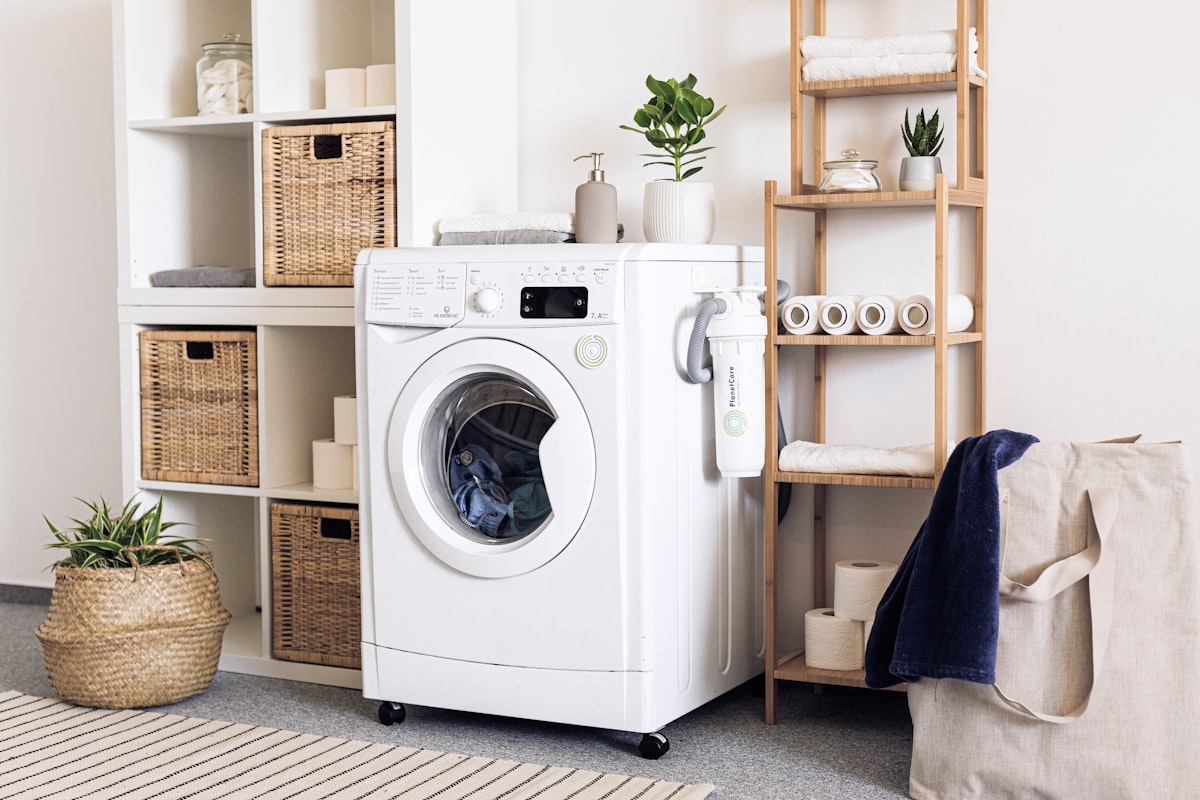
The average American washer lasts 11 years now. In 1970, it was 25. That’s not an accident.
Modern appliances are loaded with electronic control boards, proprietary sensors, and software that manufacturers stop supporting after 5–7 years. When the board fries — and it will — you’re often looking at a repair that costs 60% of a new machine. Most people just buy new. Manufacturers know this.
If you want a major appliance that actually lasts 20+ years, you have to shop differently. This guide covers which brands hold up, which have quietly gone to garbage, and how to run the math on whether BIFL appliances are worth the premium (spoiler: they almost always are).
The Real Problem With Modern Appliances
Yale Appliance tracked 33,190 service calls in 2026 across Greater Boston, Cape Cod, and Southern New Hampshire. The brands with under 10% first-year service rates: Speed Queen, LG, Miele, Bosch, GE Profile, and Gaggenau. Everything else had significantly higher failure rates.
The pattern that keeps showing up: complexity kills appliances. French door refrigerators need more service than top-mount fridges. Front-load washers with electronic steam features fail more than basic top-loaders. The more circuit boards and sensors something has, the more things can go wrong — and the harder it is to find parts five years from now.
The r/BuyItForLife consensus from an October 2025 thread still getting upvotes: “Just buy a high-end front-loading machine from Miele, Electrolux, or Bosch. Avoid Samsung — they’re a nightmare to repair and their electronics fail early.”
How to Actually Buy an Appliance for Life
Before specific brands, here’s the framework that matters:
Repairability matters more than initial quality. The best BIFL appliance is one where you can get parts in 10 years and find a tech who knows how to fix it. Speed Queen’s commercial-grade parts are available because laundromats need them. Samsung parts for a 2020 refrigerator? Good luck.
Simpler mechanisms last longer. A gas dryer with a mechanical timer is repairable by almost anyone. A dryer with a touchscreen and Wi-Fi is not. If you’re buying for life, ask: what breaks first on this thing?
Warranty length signals intent. Speed Queen offers a 5-year warranty on the TC5 — 3× what most brands offer. Companies that build disposable products don’t offer long warranties.
Washers — Speed Queen TC5 Is the Clear Answer
Speed Queen TC5 (~$1,100–$1,300) — Check on Amazon
Speed Queen builds commercial washers for laundromats. The TC5 is their residential version, manufactured in Ripon, Wisconsin, with commercial-grade metal components throughout. No circuit board running the wash cycles — it’s a mechanical timer. That’s the entire point.
The TC5 has no lid lock, which means you can open it mid-cycle. No HE sensor system deciding how much water your clothes need. You control the water level. Old-school, intentionally.
Speed Queen rates the TC5 for 10,400 cycles — about 20 years of daily loads — and backs it with a 5-year warranty. No other residential washer offers that. Reddit user after 4 years: “They are worth every dollar.”
Honest caveat: the DC5 dryer has more early service complaints than the washer. Speed Queen’s service network has slowed post-COVID. If you’re rural, confirm a local tech exists before buying.
Miele W1 Series (~$1,499–$2,099) — Check on Amazon
Miele’s W1 front-loaders are engineered to a 20-year lifespan, use a honeycomb drum gentler on fabric, and run a direct-drive motor that eliminates belt failures. The knock: they cost 2–3× a comparable Samsung and Miele-authorized service isn’t everywhere. Check availability before committing. Also worth noting: Miele doesn’t make their refrigerators — those are rebadged OEM units. Their washer reputation doesn’t carry over to refrigeration.
LG Front-Load Washers (~$700–$1,100) — Check on Amazon
LG lands in Yale Appliance’s top reliability tier. Their service network is extensive, which matters for long-term ownership. More complex than Speed Queen’s mechanical top-loader, so more potential failure points over 20 years. Right choice if you need a front-loader; TC5 wins for raw longevity.
Dryers — Simple Beats Smart Every Time
Speed Queen DC5 (~$1,000–$1,200) — Check on Amazon
Pairs with the TC5 and shares the commercial-grade internals. Gas version is preferred — fewer heating element replacements, lower operating cost. 5-year warranty standard; newer steam models get 7 years.
What most BIFL buyers miss about dryers: they’re mechanically simple. The main failure points are the heating element, drum belt, and drum bearings — all available parts, all fixable for $50–$150 by any appliance tech. The BIFL play is to spend more on the washer and buy a simple mechanical gas dryer. You don’t need a $1,200 dryer to get 20+ years out of one.
Refrigerators — The Most Complicated Purchase
French door refrigerators — the most popular style right now — have the highest service rates of any major appliance category per Yale’s data. Ice makers are the single most commonly serviced component across all brands. More features means more that breaks.
Sub-Zero (~$5,000–$15,000+) — Check on Amazon
The BIFL answer for refrigeration if budget allows. Dual-compressor system (separate compressors for fridge and freezer), parts available for decades, certified technicians nationwide. Sub-Zero refrigerators regularly run 25–30 years. A 48-inch unit runs $12,000+ — but $12,000 over 30 years is $400/year. A $2,000 Samsung that needs replacement every 8–10 years costs roughly the same, plus two installation events and two disposal headaches.
GE Profile (~$1,500–$3,000) — Check on Amazon
GE makes Yale’s reliability list and has the largest appliance service network in the United States. Parts available for 10+ years. If your GE Profile breaks, a certified tech can reach you. For most buyers, GE Profile is the realistic BIFL refrigerator — not Sub-Zero longevity, but repairable and backed by infrastructure that’ll actually be there.
The refrigerator rule: Whatever you buy, skip the built-in ice maker. Every veteran appliance tech says the same thing — ice makers fail first and cost the most to fix. A countertop ice maker ($150–$200) gives you ice without tying failure risk to your $2,000 fridge.
Dishwashers — Bosch 500 Series Wins
Bosch 500 Series (~$879–$999) — Check on Amazon
Bosch is the near-unanimous r/BuyItForLife recommendation for dishwashers, and Yale’s service data backs it up. Bosch consistently lands in the bottom 10% for service calls. They’re quieter than competitors (44 dB for the 500 series), use less water, and condensation drying avoids the heating element degradation that kills American dishwashers over time.
The 500 series is the sweet spot. The 800 series (~$1,099–$1,399) adds a third rack — worth it if you cook heavily, overkill otherwise. Both last 15–20 years with basic maintenance: clean the filter monthly, run a rinse cycle every 60 days.
Miele dishwashers (~$1,200–$3,000) are the premium tier above Bosch — door mechanism and interior components built to higher tolerances. If you’re doing a full kitchen renovation and want one dishwasher for the next 25 years, Miele’s worth it. For most people, Bosch gets you 90% there.
Brands to Skip
Samsung appliances — Refrigerators notorious for ice maker failures and difficult repairs. “Smart” fridges with internal screens are essentially unrepairable once the manufacturer stops software support. Their washers and dryers have been more reliable than the fridges, but for BIFL, Samsung isn’t the pick.
LG refrigerators specifically — LG’s washers are reliable per Yale’s data. Their refrigerators have had documented compressor failures, multiple class action suits, and enough consumer backlash that LG extended the compressor warranty to 5 years. Their washers are fine. Their fridges are a different product with a different track record.
Any French door fridge with a built-in ice maker — This combination has the highest service rate of any appliance type in Yale’s 2026 dataset. If you love the French door look, get it without the ice maker.
The 20-Year Cost Math
| Option | Upfront | Expected Life | 20-Year Cost |
|---|---|---|---|
| Budget washer (~$400) | $400 | 8 years | ~$1,200+ |
| Mid-range washer (~$800) | $800 | 12 years | ~$1,400 |
| Speed Queen TC5 (~$1,200) | $1,200 | 25 years | ~$1,400 |
| Miele W1 (~$1,800) | $1,800 | 20 years | ~$2,100 |
Speed Queen and a decent mid-range washer land at roughly the same 20-year cost. The difference: Speed Queen gets you there with one machine. One installation. Zero disposal events. When year 12 arrives, the mid-range buyer is shopping again. The TC5 owner is still running the same machine they bought.
The real BIFL premium isn’t that large. The actual cost is the hassle tax when a cheap appliance dies mid-winter with a family’s worth of laundry piled up and a 3-week wait for a service tech.
The Short Version
- Washer: Speed Queen TC5. Nothing is close.
- Dryer: Speed Queen DC5 if service is available locally. Simple mechanical gas dryer if not.
- Refrigerator: Sub-Zero if budget allows. GE Profile if not. Skip the ice maker feature.
- Dishwasher: Bosch 500 series. 800 series if you want the third rack.
- Avoid: Samsung appliances, LG refrigerators, French door fridges with ice makers.
For more BIFL kitchen picks, see our guides on the best carbon steel pan, the best espresso machine and grinder setup, and brands with lifetime warranties that actually honor them.