
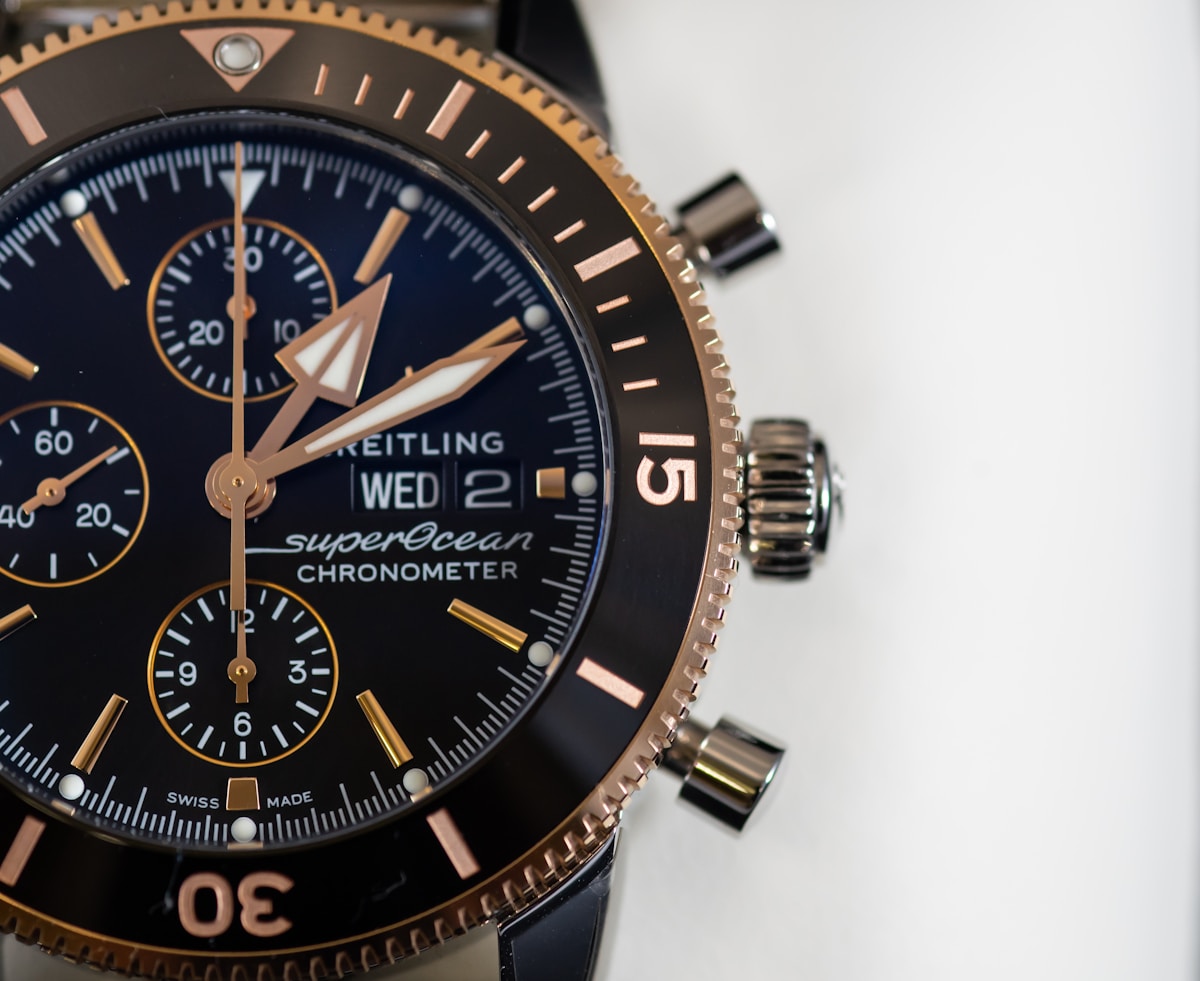
A mechanical watch bought in 1975 is still running today. That same $65 smartwatch you bought last year? Dead battery, unsupported software, landfill. If there’s one purchase category where buy-it-for-life thinking pays off more than any other, it’s watches — and r/BuyItForLife has been making this argument for over a decade.
This guide covers the best BIFL watches at every price point, from a $49 Casio that’s survived war zones to a Swiss automatic that’ll outlast your grandkids. Specific models, real prices, and exactly what to buy.
Why Mechanical Watches Are the Ultimate BIFL Purchase
Here’s the core argument: a quality mechanical watch contains no parts that fundamentally degrade. The movement is steel gears, springs, and jewels. With a service every 5–7 years ($100–$300 for most models), it runs indefinitely. Swiss and Japanese watchmakers have movements from the 1950s that still keep excellent time today.
Compare that to a quartz watch: the battery needs replacing every 1–3 years, and most “smart” watches are obsolete within 5 years when software support ends. Even a quality Seiko quartz from 2010 ticks with a fresh battery — but a $400 Apple Watch from 2015 is a paperweight.
The r/BuyItForLife community has made this calculus repeatedly. In a highly-upvoted thread on BIFL watch recommendations, one Redditor noted: “I have a Seiko SKX007 made sometime in 2001. Bought used in 2014 for $50. Got it serviced every 5 years. Runs great — +/- 1 minute per day.” That’s 25 years of daily use on a $50 investment.
What Makes a Watch Actually BIFL
Before diving into specific models, here’s what actually matters:
- Crystal type: Sapphire (hardest, scratch-resistant) > Mineral (serviceable) > Acrylic (avoid). Sapphire is the gold standard — the same material used in industrial cutting tools. Orient’s Kamasu and most Swiss watches include sapphire.
- Water resistance: 100m minimum for daily use. 200m if you’re active. “Water resistant” without a depth rating is a marketing statement, not a specification.
- Movement serviceability: Seiko NH35/NH36, Orient in-house calibers, and ETA movements can be serviced by any competent watchmaker worldwide. Proprietary movements in fashion watches cannot.
- Case material: 316L stainless steel is the standard. Full steel only — plating wears off in years.
- Standard lug width: 18mm, 20mm, or 22mm means you can replace straps forever. Proprietary integrated bracelets lock you in.
Budget Tier ($50–$150): Start Here
Casio G-Shock DW5600 — $49–$65
The G-Shock is not a mechanical watch, but it’s arguably the most BIFL watch ever made. Casio introduced it in 1983 with a challenge to its engineers: build a watch that survives a 10-meter drop onto concrete. The DW5600 has since been worn by Navy SEALs, NASA astronauts, and appeared in active combat zones. Features: 200-meter water resistance, shock protection, LED backlight, and a 10-year battery. At $65, it’s the cheapest genuinely indestructible watch you can buy. The only maintenance it ever needs is a battery swap, and the hollow module design means even that’s straightforward. For pure durability-per-dollar, nothing else on this list touches it.
Casio MDV-106 Diver — $65
Full stainless steel case and bracelet, 200-meter water resistance, a rotating diver’s bezel, and a double push-button clasp — at $65. The MDV-106 is what happens when Casio makes a serious dive watch at a non-serious price. The finish is mostly brushed with polished sides, and the bracelet feels more substantial than the price suggests. It reviews consistently as a watch that “feels much more expensive than many others priced under $100.” For a quartz watch that’ll run decades with nothing more than a $3 battery every few years, this is the standard.
Seiko SNK803 / SNK809 — $60–$90
The SNK803 and SNK809 are Seiko’s entry-level automatic field watches, and they punch above their weight. Both run the Seiko 7S26 in-house movement — self-winding from wrist movement, 41-hour power reserve. No hand-winding capability, but at this price that’s expected. The 37mm case wears cleanly and the military-inspired aesthetic is genuinely timeless. For under $100, you’re getting a fully mechanical watch with real Japanese craftsmanship and a movement that independent watchmakers service for $60–$80 when the time comes. These are the watches that turn people into automatic watch enthusiasts.
Mid Tier ($150–$300): The Sweet Spot
Orient Bambino V4 — $120–$180
The Orient Bambino is the best dress watch you can buy under $200. Full stop. It runs Orient’s proprietary F6724 in-house movement — which hacks (stops the seconds hand when you pull the crown for precise time-setting) and hand-winds, features most automatics at this price skip entirely. The domed mineral crystal creates an authentic vintage aesthetic that belongs on a $500 Swiss watch. At 40.5mm, it’s wearable without dominating. Multiple dial colors available in the V4 generation. One Redditor bought their father the Orient Bambino Small Seconds (~$200) and reported no servicing needed after years of daily use. That’s Orient’s reputation: unglamorous, reliable, legitimate.
Seiko 5 Sports SRPD Series — $80–$150
Arguably the best all-around automatic watch under $200. The 4R36 movement — Seiko’s most reliable workhorse caliber — has a 41-hour power reserve, hacks, and hand-winds. Day and date complication. Exhibition caseback. 100-meter water resistance. Seiko has released dozens of variants, from field-watch khaki to sporty blue to vintage-inspired burgundy. The SRPD55 (blue), SRPD57 (black/red), and SRPD77 (olive) are all strong choices at $80–$150. r/BuyItForLife consistently recommends this as the first automatic watch to buy. It’s also the most stolen recommendation on every beginner watch forum, which tells you everything.
Orient Kamasu — $150–$200
The Kamasu is the dive watch answer to the Bambino’s dress watch crown. It runs the F6922 in-house movement, features a genuine sapphire crystal (rare at this price point), 200-meter water resistance, and a 120-click unidirectional bezel. Available in blue, black, and green — the sunburst dials on the blue and green variants are particularly striking. For under $200, you’re getting sapphire crystal and an in-house movement with hacking and hand-winding. Independent reviews consistently note that the Kamasu performs like a $400 watch. This is our top overall pick for most buyers.
Step-Up Tier ($250–$600): When You’re Ready to Invest
Citizen Nighthawk Eco-Drive — $246
The Nighthawk is Citizen’s argument that quartz can be BIFL — and it’s a compelling one. The Eco-Drive movement charges from any light source. No battery to replace, ever. Beyond the solar charging, the Nighthawk includes a GMT hand (tracks a second time zone), an E6B circular slide rule (the same type used by aviation pilots for flight calculations), and one of the best bracelets you’ll find under $500: solid end-links, precision machined clasp with a diver’s safety. Citizen’s Eco-Drive technology has a decades-long reliability track record and is theoretically maintenance-free. For a quartz watch, there’s nothing more BIFL-worthy.
Tissot Le Locle Automatic — $440–$570
The Le Locle is where Swiss watchmaking becomes accessible. Powered by a COSC-regulated ETA 2824-2 movement — one of the most universally serviceable calibers in existence — the Le Locle is a slim, elegant dress watch with a sapphire crystal and exhibition caseback. At this price, you’re buying genuine Swiss heritage: Tissot has been making watches in Le Locle, Switzerland since 1853. The most popular reference (T006.407.11.053.00) sits around $440–$529. The ETA 2824-2 is so widely used that watchmakers worldwide service it regularly, keeping service costs reasonable. This watch will outlast you.
Investment Tier ($1,000+): The Forever Watch
Tudor Black Bay 58 — ~$3,600
Tudor is Rolex’s sibling brand — same Swiss quality, same 200-meter water resistance, same serious watchmaking pedigree, at roughly one-third the price of an equivalent Rolex Submariner. The Black Bay 58 runs Tudor’s in-house MT5402 movement, COSC-chronometer certified (accurate to +6/-4 seconds per day), with a 70-hour power reserve. At 39mm, it wears like a vintage Submariner — compact, not bloated. The Black Bay 58 is the answer to the question: “If I could only own one watch for the rest of my life, what would it be?” It works everywhere, from a boardroom to a dive boat, and will run indefinitely with servicing. New retail around $3,600; well-kept secondary market examples appear for $2,800–$3,200.
What About Rolex?
Every BIFL watch article has to answer this. Is a Rolex BIFL? Mechanically, yes — the movements are exceptional, the materials are top-tier, and a Rolex Submariner or Datejust serviced properly will last generations. But the honest BIFL math doesn’t favor them right now. A new Rolex Submariner runs $10,950 MSRP — if you can find one at retail. The Gray market commands premiums beyond that. The Tudor Black Bay 58 gives you 90% of the mechanical experience at 33% of the cost. Unless you specifically want the Rolex crown logo or are buying it as a financial asset, the Tudor is the smarter BIFL choice. Rolex is great. It’s just not the best value BIFL watch.
The Real Cost of BIFL Watch Ownership
Honest talk: mechanical watches need periodic servicing. Every 5–7 years, a watchmaker disassembles, cleans, lubricates, and reassembles the movement. Here’s what that costs over a 50-year ownership period (assuming 7 services):
- Seiko SNK803 ($90 + 7 × $80 service): ~$650 total — $13/year
- Orient Kamasu ($180 + 7 × $100 service): ~$880 total — $17.60/year
- Tissot Le Locle ($500 + 7 × $250 service): ~$2,250 total — $45/year
- Tudor Black Bay 58 ($3,600 + 7 × $600 service): ~$7,800 total — $156/year
The key insight: independent watchmakers service these movements for 40–60% less than brand service centers. A local watchmaker will clean your Seiko for $80; Seiko’s official service center charges $200. The watch doesn’t care who services it.
Our Recommendation
For most people: buy the Orient Kamasu at $150–$200. Sapphire crystal. In-house automatic movement with hacking and hand-winding. 200-meter water resistance. Serviceable by any watchmaker. Available in blue, black, or green. r/BuyItForLife recommends it consistently for buyers with a $200 budget who want a watch they’ll wear for the next 30 years.
If $200 is too much: get the Seiko 5 Sports SRPD at $80–$150. If you want indestructible over mechanical: the G-Shock DW5600 at $65 has survived conditions that would destroy any automatic.
If you want something you’ll hand down to your kids: save up for the Tudor Black Bay 58. It’s the most BIFL thing you can strap to your wrist.
And when you’re done with your watch, you’ll probably want something else that lasts forever — check out our guide to BIFL carbon steel pans, leather boots built to last, and the Herman Miller Aeron chair — all products that, like a good mechanical watch, only get better with time.