
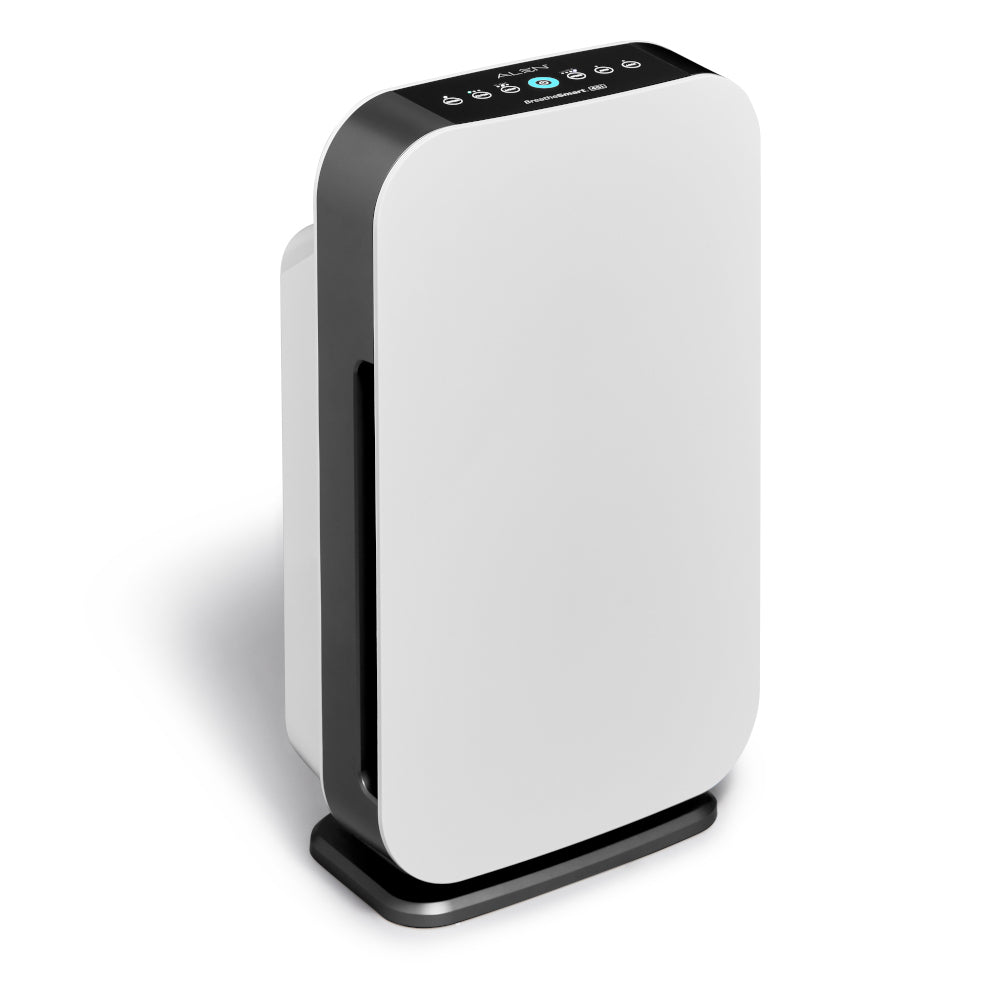
If you want a real buy-it-for-life air purifier, buy the Alen BreatheSmart 45i. It is the rare purifier with an actual lifetime-style warranty angle, quiet enough to live with, and parts plus filters that still make sense after the honeymoon period. If you want the smarter value pick, get the Coway Airmega AP-1512HH Mighty and save about $250.
The hard truth is that most air purifiers are not BIFL in the old-school cast-iron-skillet sense. They have motors, sensors, control boards, and filters you will keep buying forever. So the real test is simpler: which one still works well after years of 24/7 use, which brand still supports it, and which design does not annoy you into unplugging it? That is where Alen, Coway, Blueair, and Winix separate themselves from the disposable junk.
What makes an air purifier “buy it for life”
For this category, durability is only half the story. A BIFL air purifier needs five things:
- A real HEPA-grade filter setup, not marketing fluff.
- A fan and motor that can run constantly without sounding like a box fan from 1998.
- Replacement filters that will still exist in five years.
- A body that does not crack, yellow, or wobble after a couple of moves.
- A warranty worth caring about, not a 1-year shrug.
Wirecutter’s current testing standard is a minimum of four air changes per hour for the claimed room size, and that is the right way to think about it. Ignore miracle claims. Look at actual airflow, real room size, and whether people still like living with the machine after the novelty wears off.
Best overall: Alen BreatheSmart 45i
Alen BreatheSmart 45i costs about $449, which is not cheap. The reason it still gets the top spot is simple: it is one of the only consumer purifiers that even tries to play the long game.
According to Alen’s official specs, the 45i is rated for up to 1,900 square feet per hour or 950 square feet every 30 minutes. The quoted CADR is 255. Noise ranges from 24 dB to 50 dB, which is quiet enough for a bedroom at low speed, and power draw tops out at 64 watts. Filter life is rated around 9 to 12 months for the basic filter, and the company ties its Forever Guarantee to registration plus an active filter subscription.
That last part is the catch. The warranty is strong, but it is not a free lunch. You are buying into Alen’s ecosystem. If that bothers you, skip it. If you are fine with it, Alen offers something most purifier brands do not: a serious ownership proposition instead of a two-year fling.
Reddit air-quality threads keep circling back to the same point: Alen is the closest thing this category has to a true BIFL brand. I think that is fair, with one important correction. The purifier itself is durable. The ownership model is durable only if you are happy paying Alen filter prices.
Best value: Coway Airmega AP-1512HH Mighty
Coway’s AP-1512HH Mighty usually sits around $180 to $230, and it is still the purifier I would recommend to most people first. It is not fancy, but it has the right kind of boring reliability.
Our earlier Coway writeup covered the core specs: 361 square feet of coverage, CADR numbers of 246 for dust, 240 for pollen, and 233 for smoke, plus noise from roughly 24.4 dB to 53.8 dB. Power draw is 77 watts. Those are honest, useful numbers, and they line up with why this model keeps surviving recommendation cycles while trendier machines come and go.
The Mighty is not sexy. Good. You are buying a fan, a filter, and a box that should quietly do its job for years. That is exactly why people keep buying it for apartments, bedrooms, and offices. If the Alen is the long-haul premium pick, the Coway is the Toyota Corolla of air purifiers.
Its weakness is coverage. Do not buy one Mighty and expect it to handle a huge open-plan living room because the marketing photo looked optimistic. Buy the right size, or buy two.
If you want more detail on this model specifically, buyfor.life already has an older Coway AP-1512HH review, but this broader 2026 guide is the better place to start.
Best for large rooms: Blueair Blue Pure 211i Max
Blueair’s Blue Pure 211i Max is the pick for big open spaces, not because it is the most “BIFL” machine here, but because it actually moves a lot of air without becoming unbearable.
On Blueair’s official page, the company says it can clean 674 square feet in 12.5 minutes, 1,618 square feet in 30 minutes, and 3,235 square feet in an hour. It uses the company’s HEPASilent setup and claims 99.97% capture down to 0.1 micron. Wirecutter has praised it for strong performance, quiet operation, and energy efficiency, which matches the general consensus: the 211i Max works.
My hesitation is not performance. It is philosophy. Blueair leans harder into smart features, app control, and sensors than I want in a BIFL product. Those features are nice today, but they are also future failure points. If you love app control, fine. If you want the simplest machine most likely to stay pleasant for a decade, Coway and Alen feel safer.
Best budget pick: Winix 5500-2, if you can still find it
The Winix 5500-2 has been one of the best cheap purifier recommendations for years, usually around $160 to $200 when in stock. Current Winix pricing shows the company still playing hard in the sub-$250 range, which is why budget buyers keep landing there.
The good: solid filtration, easy filter availability, and enough real-world trust that it still shows up in recommendation threads long after trend brands cycle through. The bad: Winix does not give you the same long-term ownership confidence as Alen, and it feels more mid-tier than heirloom.
That sounds like faint praise, but it is honest praise. A budget air purifier does not need to be romantic. It needs to work, stay reasonably quiet, and not become e-waste next spring.
The models I would skip
I would skip most no-name Amazon purifiers, anything that looks like a tiny glowing cylinder for under $80, and any brand selling “medical grade” as a substitute for real airflow numbers.
I am also skeptical of overcomplicated purifier designs that force you into weird app workflows, touch controls that only work on the third tap, or permanent ionizer behavior you cannot shut off. Wirecutter is right to be wary of ionizers and ozone-adjacent gimmicks. A purifier should clean the air, not start a side quest.
Blueair is good, but I would not call it the cleanest BIFL answer because the smart-heavy design is more complex than it needs to be. Dyson falls into the same broader category for me: impressive industrial design, less convincing value once you strip away the theater.
What Reddit gets right, and wrong, about air purifiers
r/BuyItForLife and the air-quality subreddits get one big thing right: people care more about ownership friction than lab bragging. They remember the purifier that still runs after seven years, the one whose filters are easy to buy, and the one that does not flash a bright blue light across the bedroom at 2 a.m.
They also get one thing wrong. People keep chasing one-machine solutions for giant homes. That usually wastes money. Two correctly sized Coways often beat one oversized designer purifier shoved in the wrong corner.
This is the same lesson as our major appliances durability guide: boring engineering wins more often than flashy features.
My honest verdict
If you want the closest thing to a buy-it-for-life air purifier, buy the Alen BreatheSmart 45i. It has the strongest long-term ownership case, especially if the Forever Guarantee structure does not bother you.
If you want the smarter purchase for most homes, buy the Coway AP-1512HH Mighty. At roughly half the price of the Alen, it gets you most of what actually matters.
If you have a big open room and need real airflow, step up to the Blueair Blue Pure 211i Max. If you are trying to spend less, the Winix 5500-2 remains the budget answer.
And if you are shopping by star rating alone, stop. Air purifiers are closer to lifetime-warranty brands than impulse gadgets. The best ones disappear into your life and keep working. That is the whole game.