
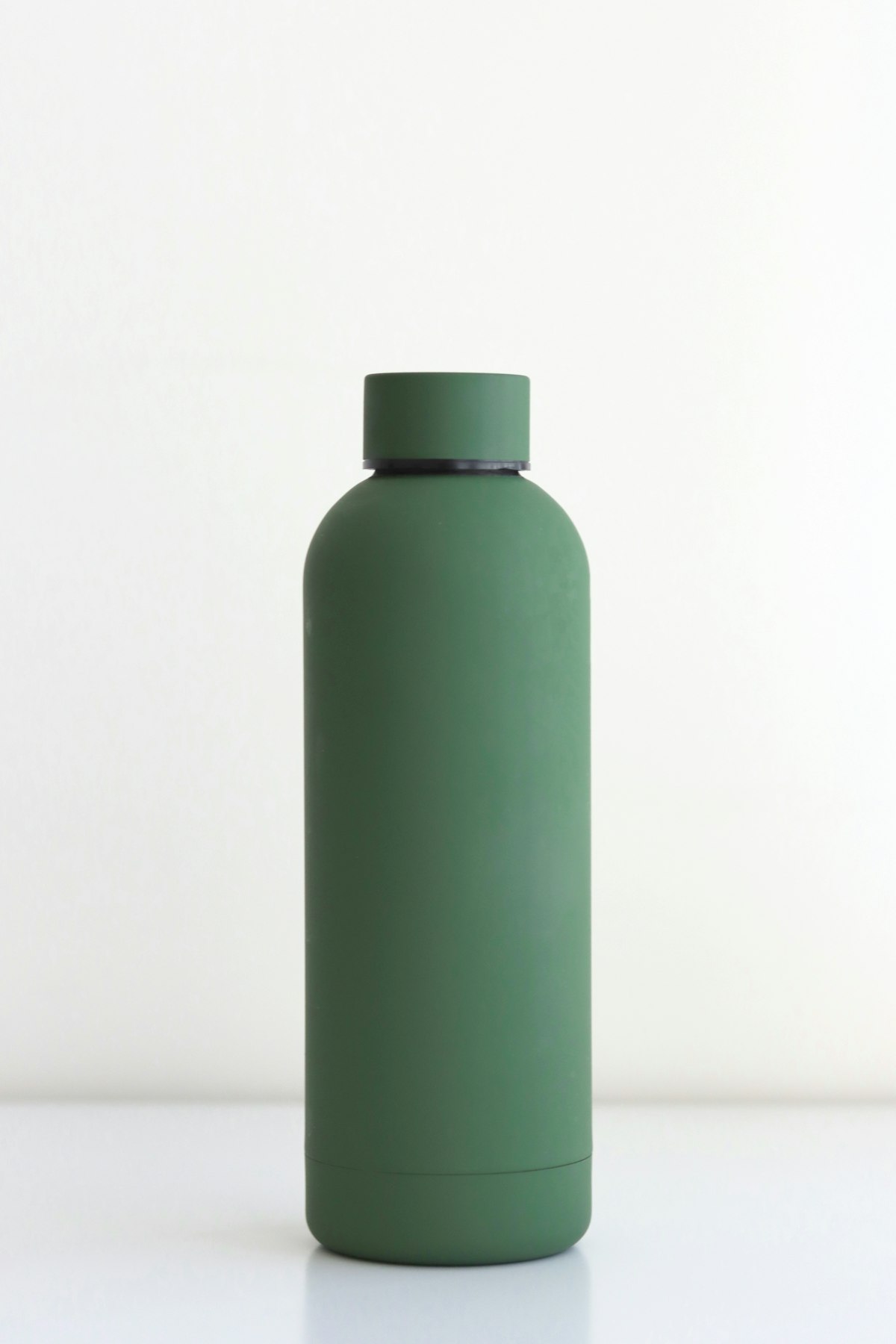
Your water bottle gets dropped on concrete, left in a hot car, shoved in a backpack, and washed a thousand times. Most don’t survive two years. Here’s what actually lasts — and what’s just expensive marketing.
The Problem With Most Water Bottles
Go look in your kitchen cabinet. I’ll wait. You’ve got three dented Hydro Flasks with chipped paint, a Yeti with a lid that leaks, and two plastic bottles you got free at a corporate event. Sound about right?
The average person buys 4-6 reusable water bottles over five years according to a 2024 Civic Science survey. That’s $80-200 gone to bottles that cracked, dented, or started tasting like dishwasher soap. The BIFL approach is different: buy one, use it for a decade, replace only the lid when the silicone wears out.
There are really only three materials that qualify as buy-it-for-life: Tritan plastic (BPA-free polycarbonate), 18/8 stainless steel, and titanium. Everything else — aluminum, glass, cheap polypropylene — fails on the timeline we’re talking about.
Nalgene Wide-Mouth Sustain ($15)
This is the answer if you want BIFL on a budget. The Nalgene Sustain (formerly the Tritan Wide-Mouth) costs $15, weighs 6.25 oz empty, holds 32 oz, and has essentially no failure points. There’s no paint to chip, no vacuum seal to break, no moving parts beyond the cap.
r/BuyItForLife users routinely post Nalgenes from the early 2000s still going strong. The material — Eastman Tritan Renew, made from 50% recycled plastic — doesn’t retain flavors, doesn’t leach, and survives drops that would crater a steel bottle. The wide mouth fits ice cubes and is easy to clean by hand.
The downside: no insulation. Your water hits room temperature in two hours. And the cap tether loop is the one weak point — it can crack after 5+ years of heavy use. Replacement caps run $5-8 on Amazon.
Buy it if: You want the cheapest BIFL bottle, you don’t care about insulation, and you value light weight over everything.
Yeti Rambler 26 oz ($35-40)
The Yeti Rambler is the one steel bottle that earns its price tag on durability alone. It’s made from 18/8 stainless steel with a Duracoat finish that doesn’t chip — I’ve seen Ramblers that look beat to hell but still hold temperature perfectly. The double-wall vacuum insulation keeps water cold for 24+ hours and ice solid for most of a day.
What makes the Rambler BIFL versus other steel bottles: the wall thickness. Yeti uses thicker gauge steel than Hydro Flask or Stanley. Drop a Yeti from waist height onto concrete and it might pick up a small dent. Drop a Hydro Flask the same way and you’ll see a visible crater that compromises the vacuum seal.
Good Housekeeping’s 2025 lab testing confirmed the Rambler kept water under 58°F for 24 hours straight. The Chug Cap is dishwasher-safe and the only lid component that eventually wears (silicone gasket after 2-3 years). Yeti sells replacements for $10.
Buy it if: You want insulated cold water all day and you’re hard on your gear. The 26 oz is the sweet spot — the 36 oz is too heavy for everyday carry.
Klean Kanteen Classic 27 oz ($28-32)
Klean Kanteen has been making steel bottles since 2004 and their Classic line is the no-nonsense option. 18/8 food-grade stainless steel, electropolished interior (no flavor transfer), and a loop cap that’s been the same design for 15 years — which means replacement caps are cheap and easy to find.
Where Klean Kanteen beats Yeti: weight and value. At 8.5 oz empty, it’s noticeably lighter than the Rambler. And at $28, you get the same 18/8 steel construction without paying for the Yeti brand premium. The tradeoff is thinner walls — it dents more easily than the Rambler but holds up far better than Hydro Flask.
The Climate Lock insulated version ($35) adds double-wall vacuum insulation comparable to Yeti, but in a slimmer profile that actually fits in most car cup holders. This matters more than you think if you commute daily.
Buy it if: You want steel bottle durability at a fair price, and cup-holder compatibility is non-negotiable.
Klean Kanteen Classic on Amazon →
Stanley IceFlow Fast Flow ($32-38)
Stanley’s IceFlow won Good Housekeeping’s top insulated bottle in 2025 — it stayed under 58°F after 24 hours and didn’t leak in their drop test. The Fast Flow lid delivers water quickly through a high-flow spout, which is a real upgrade if you’re drinking during workouts.
Stanley has been making vacuum bottles since 1913 (their Classic Thermos is a legitimate BIFL icon). The IceFlow continues that tradition with a double-wall steel body and a lid that disassembles completely for washing — no mold gunk building up in hidden corners.
The Achilles heel: the lid mechanism is more complex than Nalgene or Klean Kanteen. More parts means more potential failure points. The silicone gasket needs replacing every 2-3 years ($6-8 from Stanley).
Buy it if: You want the best insulated bottle for active use and don’t mind replacing the gasket occasionally.
Snow Peak Titanium Kanpai 350 ($55-65)
Titanium is the ultimate BIFL water bottle material — lighter than steel, stronger than aluminum, doesn’t corrode, doesn’t retain flavors, completely inert. Snow Peak has been making titanium campware in Japan since 1959, and the Kanpai 350 is their flagship bottle.
At 5.1 oz empty and 11.8 oz full, it’s the lightest insulated option on this list. The double-wall construction keeps drinks hot or cold for 6+ hours. Not in the same insulation league as Yeti or Stanley, but titanium’s strength-to-weight ratio means this bottle will survive anything short of deliberate destruction.
The catch: $55-65 is steep for a 12 oz bottle. You’re paying for titanium and Japanese manufacturing. If you camp, hike, or care about ultralight gear, it’s worth it. If you just want a desk bottle, it’s overkill.
Buy it if: You’re an ultralight hiker or you want the absolute most durable bottle money can buy, regardless of capacity.
What to Skip
Hydro Flask ($30-45): The paint chips within a year, the walls dent on the first drop, and the vacuum seal fails when the bottom gets dented. Reddit’s r/BuyItForLife consensus: “They dent incredibly easy, if you dent the bottom they tend to lose insulation.” Not BIFL at any price.
Owala FreeSip ($28-35): The straw-and-spout lid is a mold trap. Multiple Reddit threads detail cleaning nightmares. The plastic latch breaks after 1-2 years. Great for six months, not built for the long haul.
Contigo Autoseal ($15-25): The autoseal button mechanism fails. It’s not a matter of if — usually 12-18 months. The bottle itself is fine, but a bottle that leaks in your bag isn’t BIFL.
Glass bottles (bkr, Lifefactory): Glass breaks. No amount of silicone sleeve changes the fundamental physics. Not BIFL unless you never leave your house.
Cheap Amazon generics ($8-15): Single-wall steel with no quality control. The welding seam rusts within a year, caps leak, and there’s no warranty. You’ll buy three of these in the time one Nalgene lasts.
Cost Per Year: The Real Math
Assuming 10-year ownership and one lid/cap replacement:
- Nalgene Sustain: $15 + $6 cap = $21 ÷ 10 years = $2.10/year
- Klean Kanteen Classic: $28 + $8 cap = $36 ÷ 10 years = $3.60/year
- Stanley IceFlow: $35 + $8 gasket = $43 ÷ 10 years = $4.30/year
- Yeti Rambler 26: $38 + $10 cap = $48 ÷ 10 years = $4.80/year
- Snow Peak Kanpai: $60 (no replacement parts) = $6.00/year
- Hydro Flask (if it lasts 3 years): $35 ÷ 3 years = $11.67/year
- Plastic disposable (2x/year): $5 × 2 × 10 = $10.00/year
The Nalgene wins on pure cost. The Yeti wins if you need insulation. Both beat buying cheap bottles repeatedly.
The Verdict
Get the Nalgene Sustain if you want cheap and indestructible. Get the Yeti Rambler if you need cold water all day and you’re rough on your stuff. Get the Snow Peak if you hike and want the best.
Skip Hydro Flask, skip Owala, skip glass, skip Amazon generics. Buy one bottle, use it for a decade. That’s the whole point.
Looking for more gear that actually lasts? Check out our BIFL socks guide, our Estwing hammer review, and our cast iron skillet comparison.