
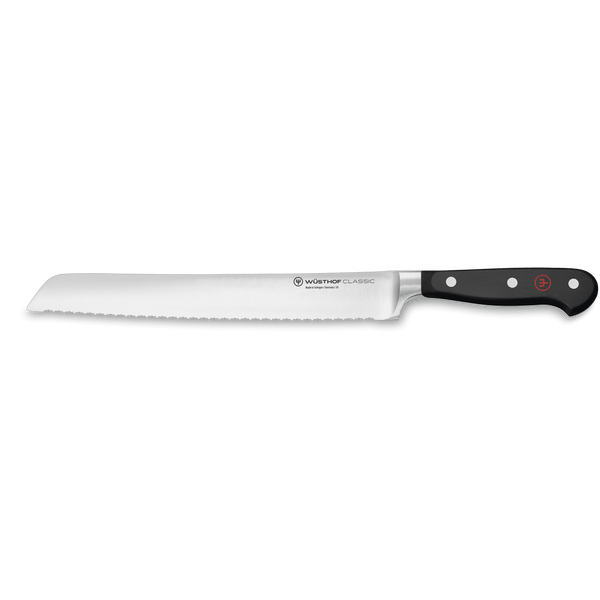
The best buy-it-for-life bread knife for most people is the Victorinox Fibrox 10.25-inch Bread and Pastry Knife. It cuts crusty sourdough cleanly, does not crush soft sandwich bread, costs about $50, and has the kind of ugly, grippy handle that usually means this thing was built for work, not Instagram. If you want an upgrade, buy the Wusthof Classic 9-inch Double Serrated Bread Knife for about $150. If you want the value sleeper, grab the Tojiro F-737 for about $35.
Most bread knives are not truly buy-it-for-life in the same way a cast iron skillet is. Serrations are harder to sharpen, and eventually every serrated edge wears down. That said, a good bread knife can still last a very long time if you stop abusing it on ceramic plates, frozen loaves, and dishwasher cycles. Buy one good serrated knife, treat it decently, and you are done shopping for this category for years.
The short answer
Buy the Victorinox Fibrox 10.25-inch Bread and Pastry Knife if you want the best mix of durability, cutting performance, comfort, and price. It has the exact traits that keep showing up in practical kitchen gear recommendations: commercial-grade handle, stamped stainless blade, enough length for wide boules, and no fake luxury markup.
If you bake a lot of crusty artisan bread and want the nicest long-term option, the Wusthof Classic 9-inch Double Serrated Bread Knife is the premium pick. The double-serrated edge should stay effective longer than a basic serration pattern, and Wusthof’s fit and finish is miles better than the cheap stamped stuff crowding Amazon.
If you want the cheapest knife here that still deserves respect, the Tojiro F-737 is the answer. It is not as polished as the Wusthof, but it slices absurdly well for the money.
What makes a bread knife BIFL
A bread knife earns the label a little differently than a cast iron skillet or a Dutch oven. You are not buying a hunk of metal that can survive a house fire. You are buying a cutting tool with one job: make long, clean, low-drama slices for years.
Here is what actually matters:
- Blade length. Under 9 inches gets annoying fast. A proper bread knife needs enough travel to slice a big sourdough loaf in one motion instead of sawing halfway through and tearing the crumb.
- Serration shape. Food Network’s 2026 bread knife testing preferred rounded serrations over aggressive pointy teeth because the pointier styles shredded food more easily. That matches real kitchen use.
- Steel and corrosion resistance. Most good bread knives use stainless, not high-maintenance carbon steel. That is a feature, not a compromise.
- Handle durability. You want a handle that can take years of wet hands, greasy fingers, and drawer bumps without loosening.
- Replaceability versus heirloom fantasy. A BIFL bread knife should last a long time, but if you burn through it after a decade of heavy baking, that is still a win.
This is also one category where commercial-looking gear often beats premium lifestyle gear. The same thing happens with chef’s knives, can openers, and cutting boards. The prettiest option is rarely the one line cooks would pick.
Best buy-it-for-life bread knife overall: Victorinox Fibrox 10.25-inch Bread and Pastry Knife
Price: about $50
Affiliate link: Check price on Amazon
Victorinox keeps winning these durability conversations for the same reason its chef’s knives do. It does not waste money on fancy scales, mirror polish, or packaging designed for wedding registries. The money goes into a thin, sharp, stainless blade and a textured Fibrox handle that stays grippy even when your hands are wet.
This knife’s biggest advantage is that it feels built to be used hard. If you bake every week, slice tomatoes often, or cut layer cakes without wanting a dedicated cake knife, the Victorinox makes sense. Food Network’s latest testing emphasized that the best bread knives should also handle tomatoes and soft loaves cleanly, and this one has the geometry for that kind of work.
The downside is obvious. It is not pretty. If you want a knife block full of showroom pieces, this is not that. But buyfor.life readers usually know the deal. The ugly kitchen tool that works every single time ages better than the pretty tool that annoys you twice a week.
- Why it lasts: durable Fibrox handle, long 10.25-inch blade, stainless construction, and a strong real-world reputation
- Real weakness: not a showpiece, and serrated knives still need occasional professional sharpening or eventual replacement
Best premium bread knife: Wusthof Classic 9-inch Double Serrated Bread Knife
Price: $150
Affiliate link: Check price on Amazon
If you want the nicest bread knife that still makes practical sense, this is it. Wusthof’s double-serrated pattern is not just marketing fluff. The company says the smaller serrations nested inside the larger ones help the edge stay effective longer and need less pressure. That claim makes sense because the whole point of a bread knife is preserving the crust and crumb instead of ripping through both.
This is the knife I would buy if I baked several times a week and cared about long-term refinement, not just utility. Wusthof also gives you the kind of handle fit, balance, and overall finish that cheaper knives do not. It feels like a tool meant to stick around.
The catch is price. At $150, this is three Victorinoxes. That math only works if you genuinely care about better feel and longer edge life. Otherwise, the cheaper knife is the smarter buy.
- Why it lasts: excellent handle construction, strong brand track record, stainless German steel, and a smarter serration design
- Real weakness: expensive for a single-purpose knife
Best value bread knife: Tojiro F-737 Bread Slicer 235mm
Price: about $35
Affiliate link: Check price on Amazon
The Tojiro F-737 has built a cult following because it cuts far above its price. Search results in 2026 still show it getting recommended by specialty knife shops, and that is not an accident. The blade is thin, long, and aggressive enough to glide through crust without demanding much effort.
This is the knife for people who care about cutting performance first and aesthetics somewhere around sixth. The handle is plain. The look is plain. The actual slicing is not plain at all.
The tradeoff is long-term toughness in the handle and finish. It is a cheaper knife, and it looks and feels like one compared with Wusthof. I would still trust it over a pile of trendy serrated junk sold under random marketplace brands.
- Why it lasts: proven value reputation, long blade, and a price that makes the cost-to-performance ratio ridiculous
- Real weakness: budget-tier fit and finish, plus a less confidence-inspiring handle than Victorinox or Wusthof
Also good: Mercer Millennia 10-inch Wavy Edge Bread Knife
Price: usually around $20 to $25
Affiliate link: Check price on Amazon
This is the budget workhorse. Wirecutter’s 2025 recommendation for the best serrated bread knife went to the Mercer M23210, and that tells you a lot. Mercer has the same broad appeal as Victorinox in pro-adjacent kitchens: ugly handle, useful blade, low drama.
I would not call it the most BIFL option here because the overall refinement and long-term confidence are a step down from Victorinox. But if your budget is tight, this is the cheapest knife I would buy without feeling like I was setting money on fire.
What I would skip
I would skip tiny 8-inch bread knives unless you only cut sandwich loaves. They are frustrating on big boules and awkward on watermelons.
I would also skip no-name Amazon serrated knives with fake Damascus patterns, acacia wood gift boxes, and suspiciously perfect reviews. Bread knives do not need luxury theater. They need decent steel, sane serrations, and a handle that does not crack.
I am also skeptical of paying premium money for ultra-hard boutique bread knives unless you already know you love that brand. A bread knife lives a rougher life than your best gyuto. It gets loaned to relatives, rattles in drawers, and gets used on things it should not. That is exactly why durable mainstream options win.
How to make a bread knife last longer
If you want your bread knife to last ten years instead of four, do these five things:
- Hand wash it. Dishwasher heat and detergent are brutal on handles and edges.
- Use a wood or soft plastic board, not glass, granite, or ceramic.
- Do not cut frozen bread unless the knife explicitly says it is built for it.
- Store it in a blade guard, on a magnetic strip, or in a knife block where the edge is not scraping metal.
- Get it professionally sharpened when it starts tearing instead of slicing.
That last point matters more than people think. Plenty of owners throw out a bread knife that just needed service. A serrated edge can absolutely be maintained. It is just more annoying than touching up a plain edge at home.
If you do not actually need a bread knife
A lot of people buy a bread knife because it feels like a standard kitchen checkbox. Fair enough. But if you almost never slice crusty loaves, you may be better off putting that money into a better chef’s knife, a better cutting board, or a Dutch oven that will outlive your stove.
If you are building a durable kitchen from scratch, these are the upgrades I would prioritize alongside a bread knife:
- A serious chef’s knife
- A cutting board that will not warp or split in a year
- A Dutch oven you can actually hand down
Final verdict
Buy the Victorinox Fibrox 10.25-inch Bread and Pastry Knife and move on with your life. It is the best buy-it-for-life bread knife for most people because it does the job, shrugs off abuse better than prettier competitors, and costs a sane $50.
If you want the nicest premium option, get the Wusthof Classic Double Serrated. If you want the sneaky-good bargain, get the Tojiro F-737. If you need the cheapest acceptable choice, get the Mercer Millennia.
Bread knives are simple. Do not romanticize them. Buy one good one, keep it off ceramic plates, and let the cheap serrated junk die in someone else’s kitchen drawer.